Species guide
Every invasive plant you are likely to meet in Swansea
Ranked by how much trouble they cause here — to buildings, to riverbanks, to Gower's grassland and, in one case, to your skin.
Aquatic weeds / water & wetland
Plants that live in the water
Two of Swansea's worst invaders live in ponds, ditches, streams and marshy ground — and everything that grows on a riverbank needs treating differently. Water carries fragments and seed for miles, so never cut, dredge or compost these near a watercourse without advice.
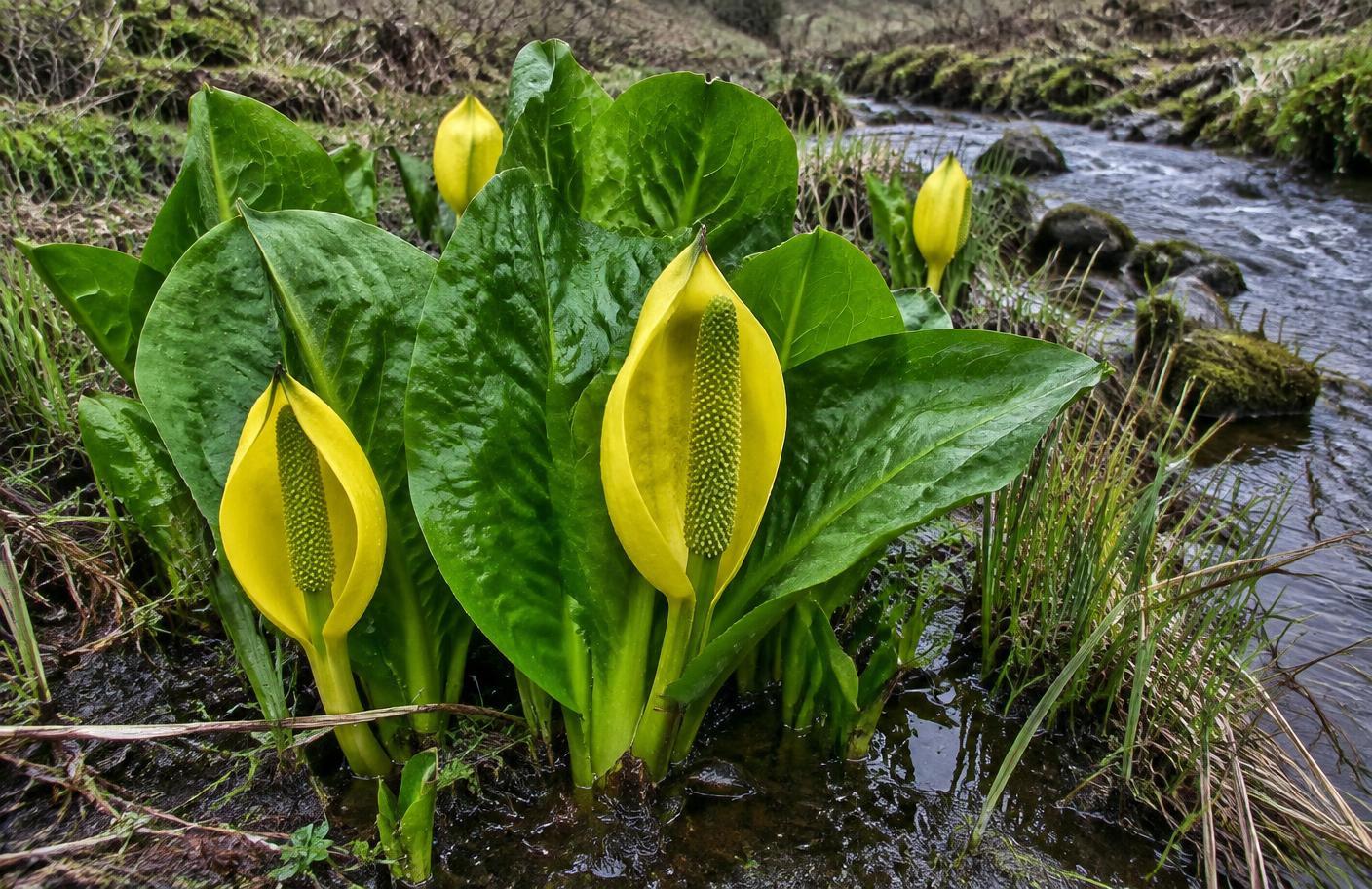
American skunk cabbage
Lysichiton americanus
Pond margins and wet hollows in Clyne Valley, ditches on the margins of Parc Wern and Hendrefoilan, and streamside gardens across west Swansea.
Open the guide →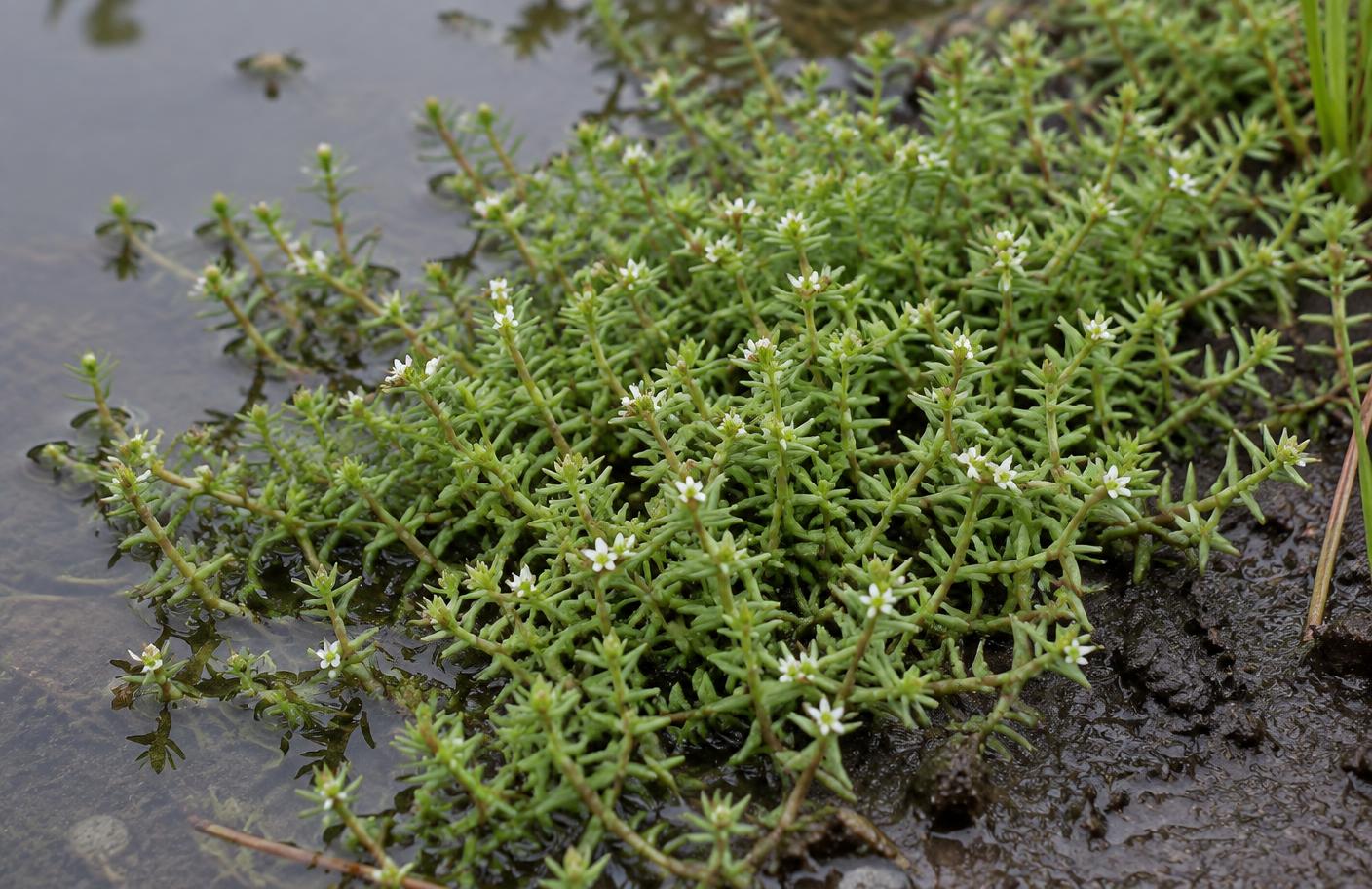
New Zealand pygmyweed
Crassula helmsii
Pond and ditch systems across Clyne Valley and the Lliw reservoir margins; a serious risk to Gower's freshwater pools if fragments arrive on boots or dogs.
Open the guide →Found a weed in a stream, pond or drain? Report it rather than pulling it — or call Natural Resources Wales on 0300 065 3000 (24 hours).
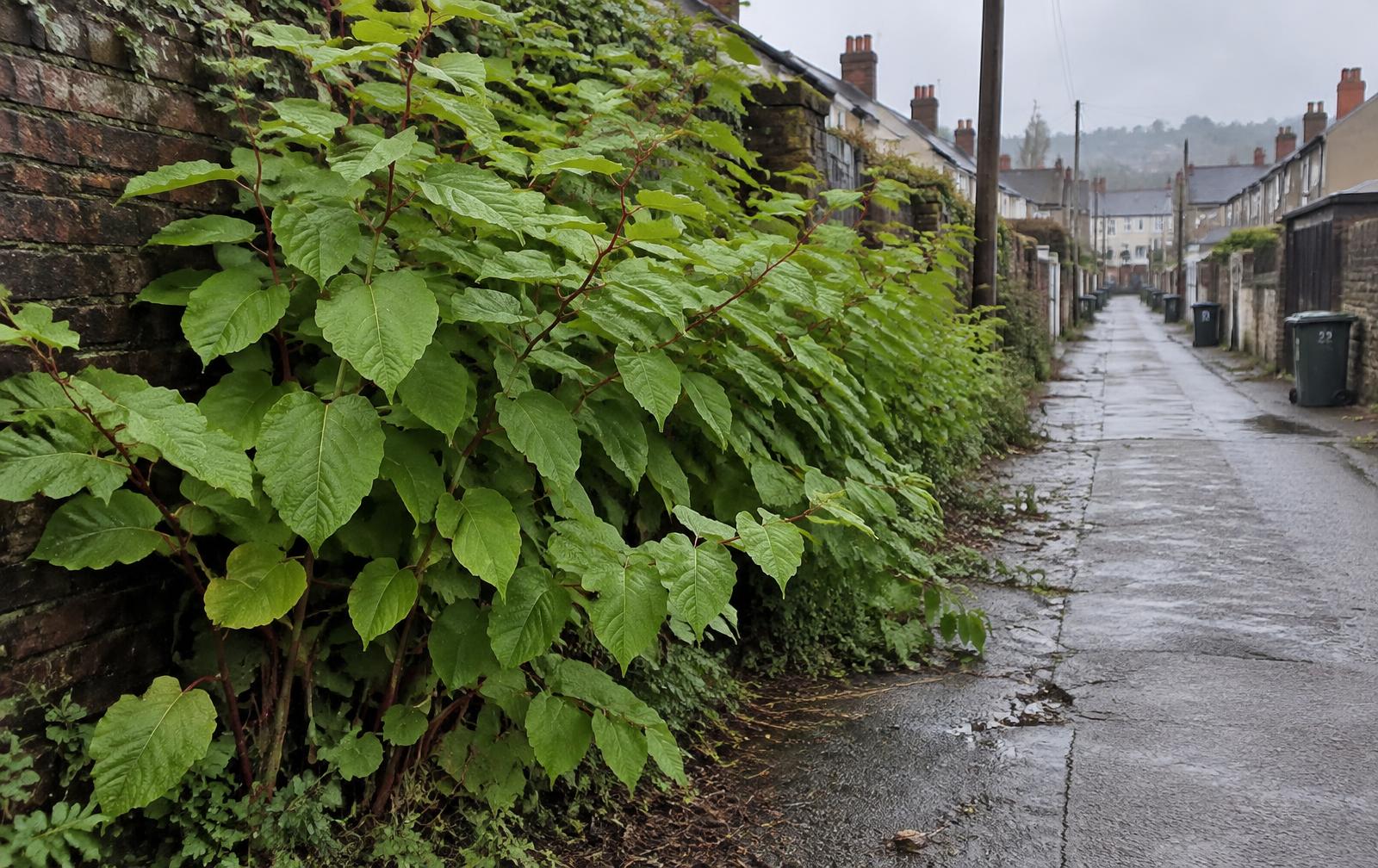
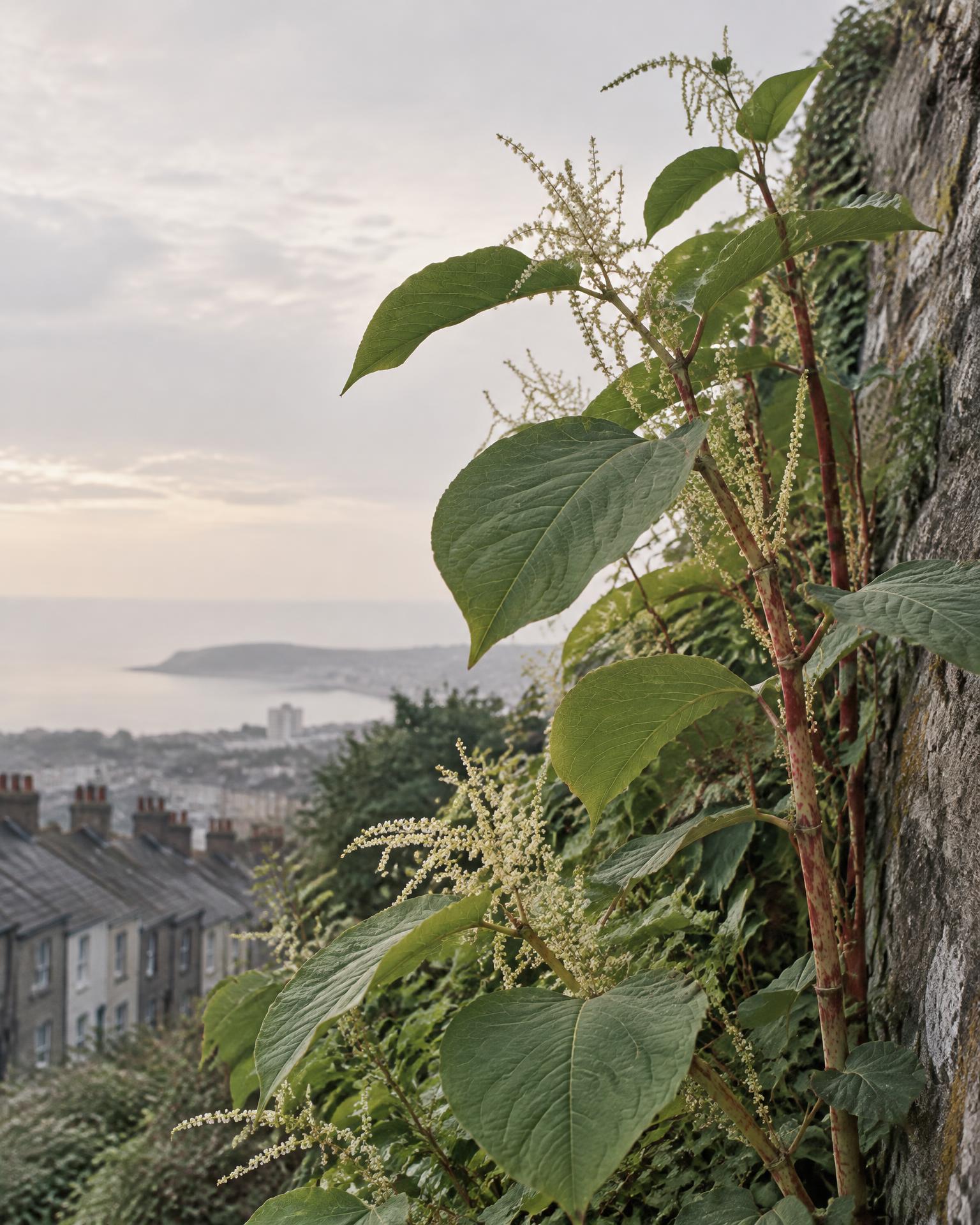
Japanese knotweed
Fallopia japonica
Swansea is one of the worst-affected places in Britain. Knotweed dominates back lanes, railway embankments, riverbanks and derelict plots across the city, and it is the weed most likely to affect a mortgage or a sale.
- Season
- Shoots March–April, peak growth June–August, canes die back brown in winter
- Where in Swansea
- Heaviest along the Tawe corridor, the Clyne and Cadle brooks, disused railway land in Landore and Morriston, and the back lanes of Brynmill, Uplands and Sandfields.
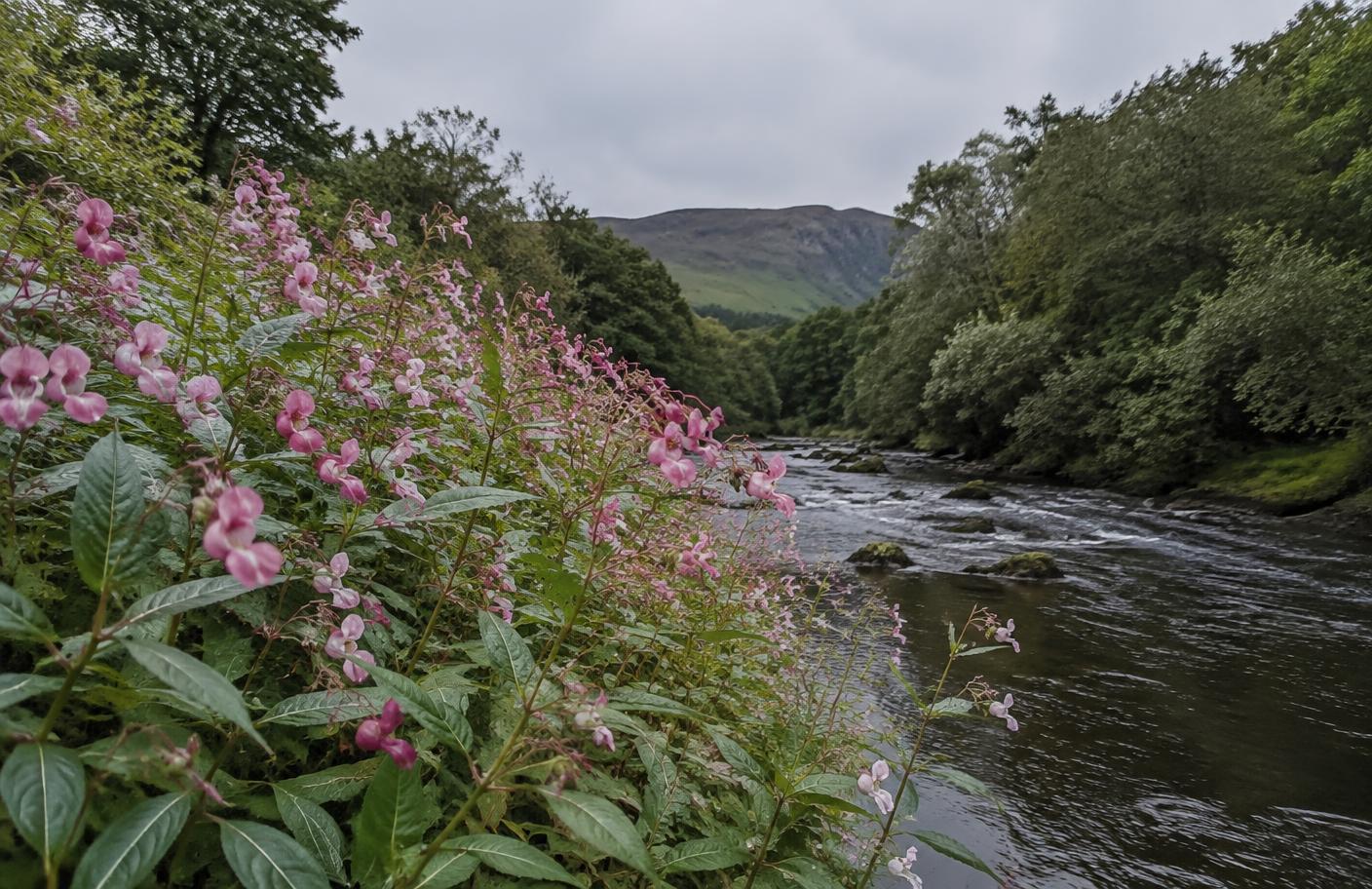
Himalayan balsam
Impatiens glandulifera
The pink-flowered annual that lines almost every stream in Swansea. One plant throws up to 2,500 seeds and the seed floats, so a single upstream patch reseeds miles of bank.
- Season
- Germinates March, flowers June–October, dies back with first frost
- Where in Swansea
- Clyne Valley, Nant Bran, the Tawe upstream of Morriston, Llan brook in Bishopston, and most of the Gower stream valleys.
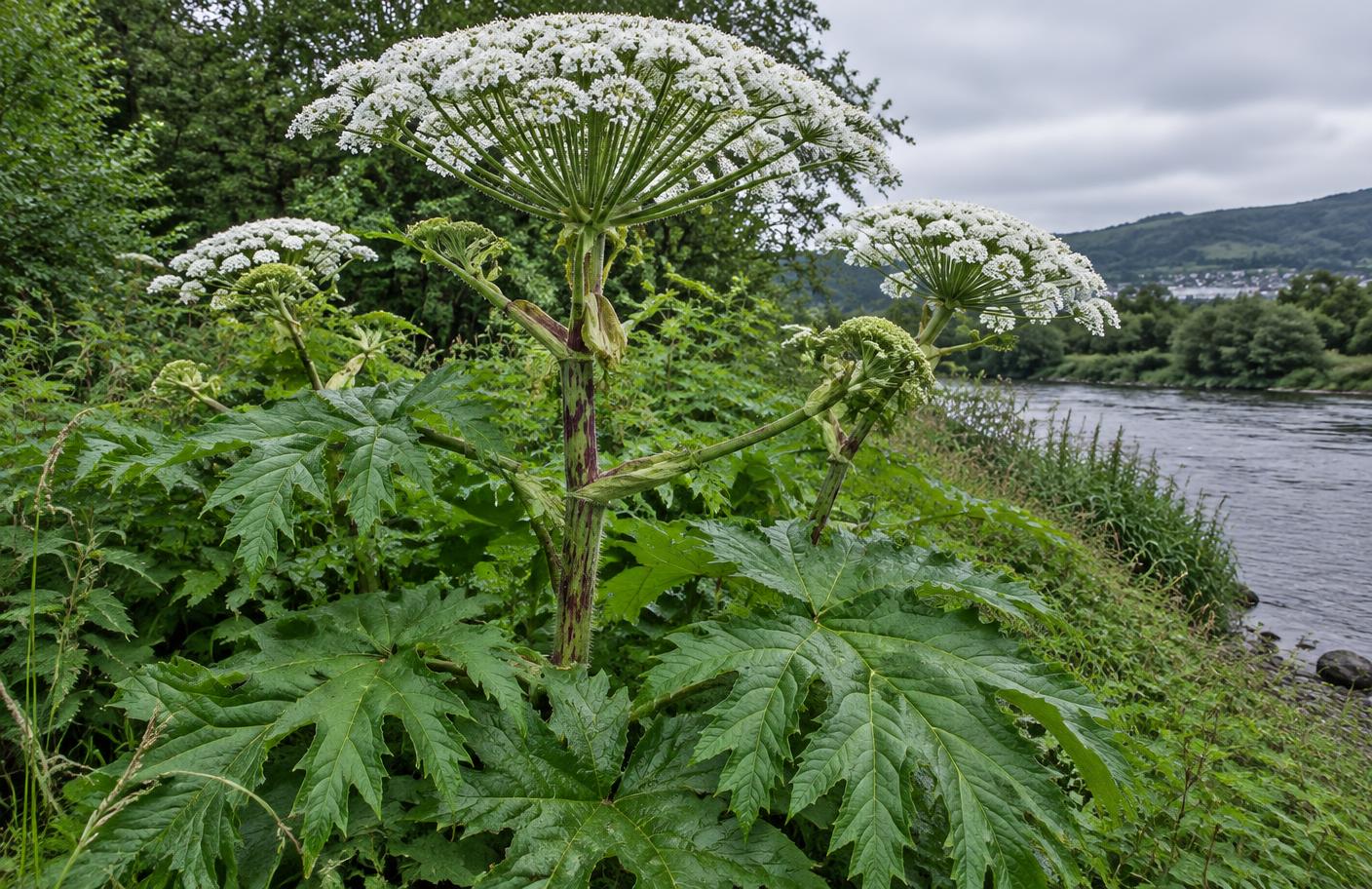
Giant hogweed
Heracleum mantegazzianum
The one that hurts people. Its sap makes skin blister badly in sunlight, and the burns can recur for years. Children are most often affected because the hollow stems look like play material.
- Season
- Growth from April, flowers June–July, seeds August
- Where in Swansea
- Scattered along the lower Tawe, around Llansamlet and parts of the Loughor estuary fringe.
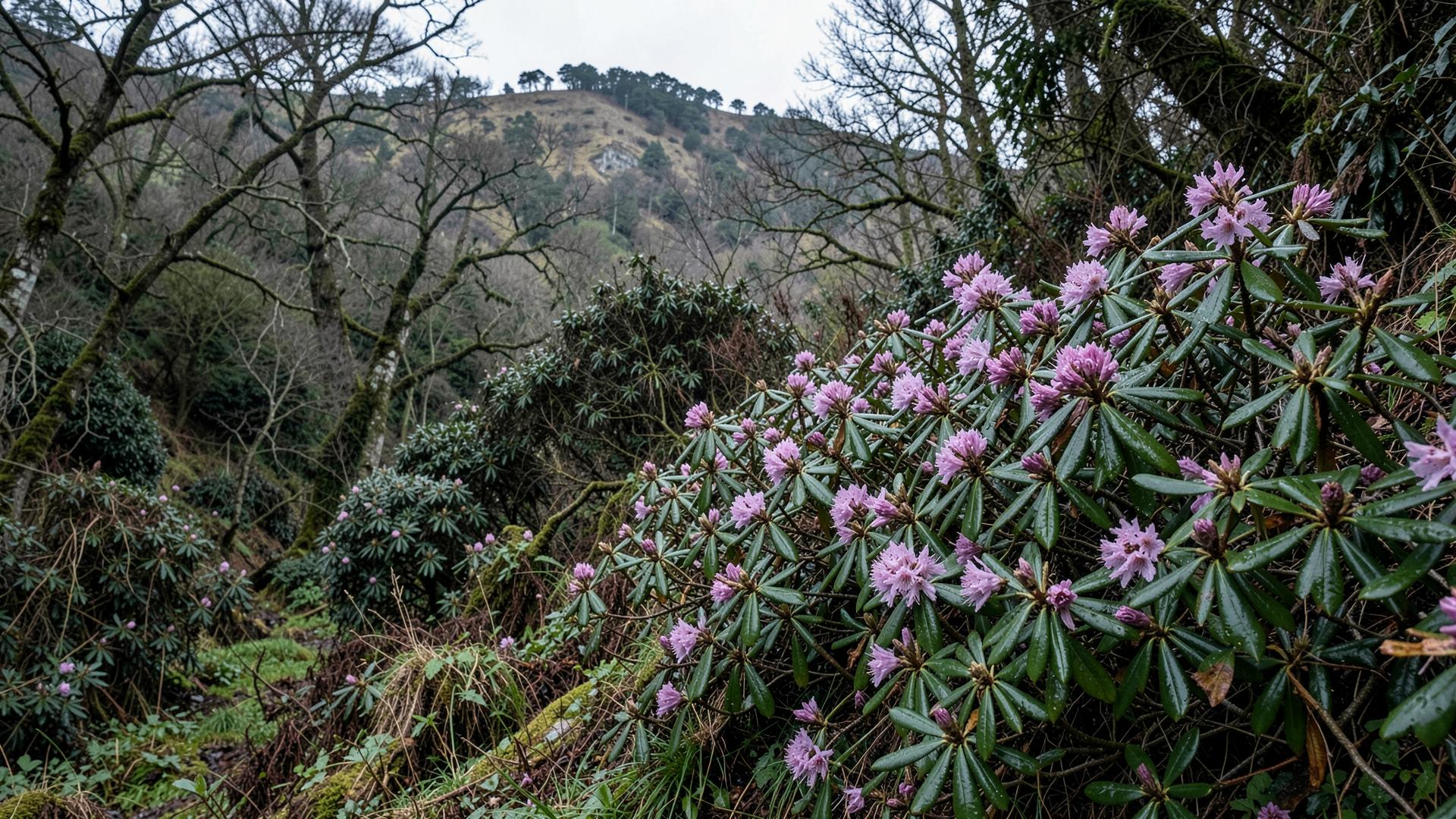
Rhododendron ponticum
Rhododendron ponticum
A Victorian garden shrub that has swallowed large parts of Clyne Valley and the Gower woodlands, turning ancient woodland floor into bare, dark, sterile ground.
- Season
- Evergreen, flowers May–June
- Where in Swansea
- Clyne Valley Country Park, Clyne Gardens fringes, Bishopston and Nicholaston woods, and the Kilvey Hill plantations.
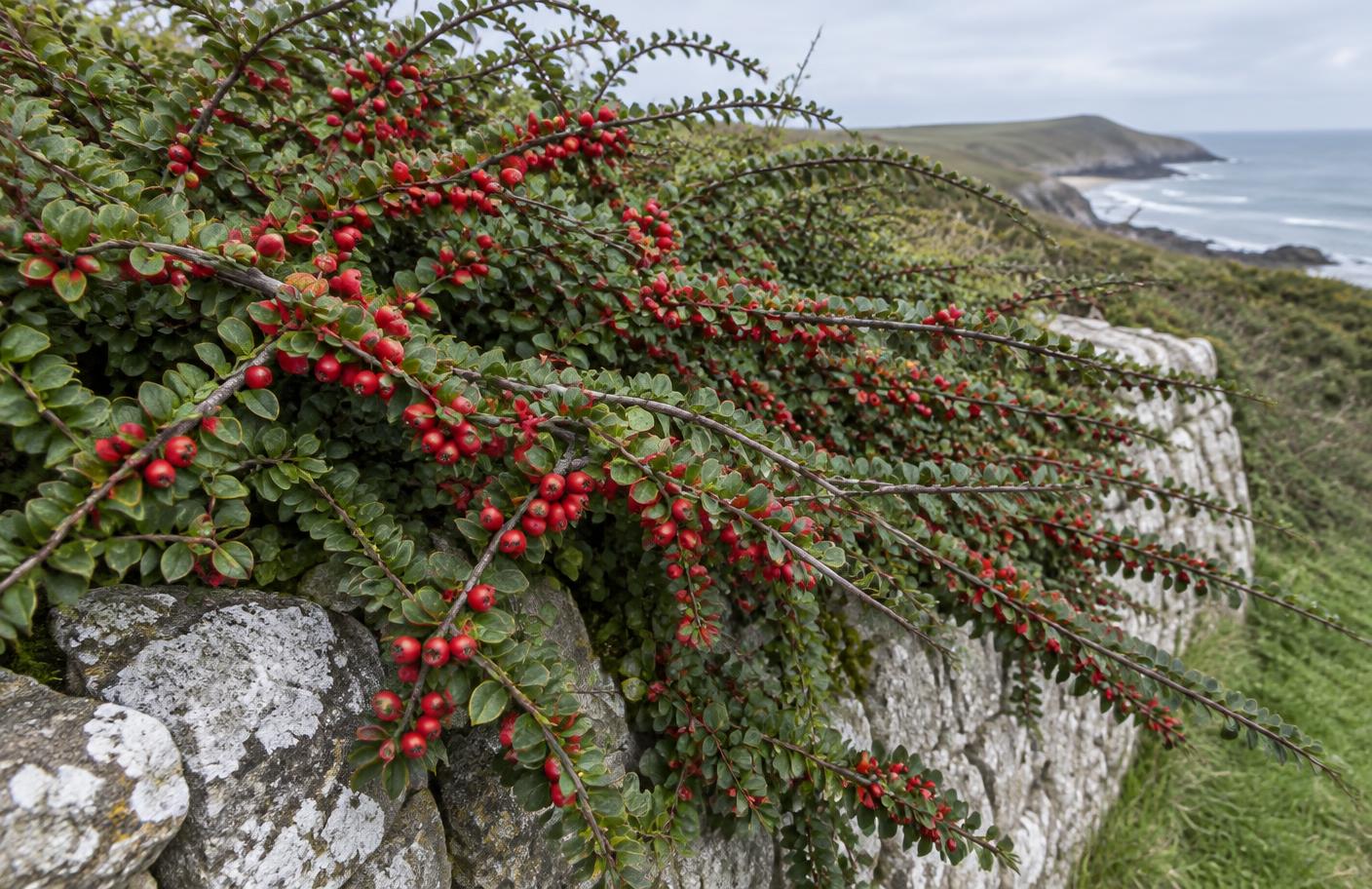
Wall cotoneaster
Cotoneaster horizontalis and related species
Birds carry the berries from gardens straight onto Gower's limestone cliffs and grasslands, where cotoneaster smothers some of the rarest plant communities in Wales.
- Season
- Flowers May–June, red berries autumn into winter
- Where in Swansea
- Mumbles Head, Langland and Caswell cliffs, Pennard, Oxwich and Rhossili slopes.
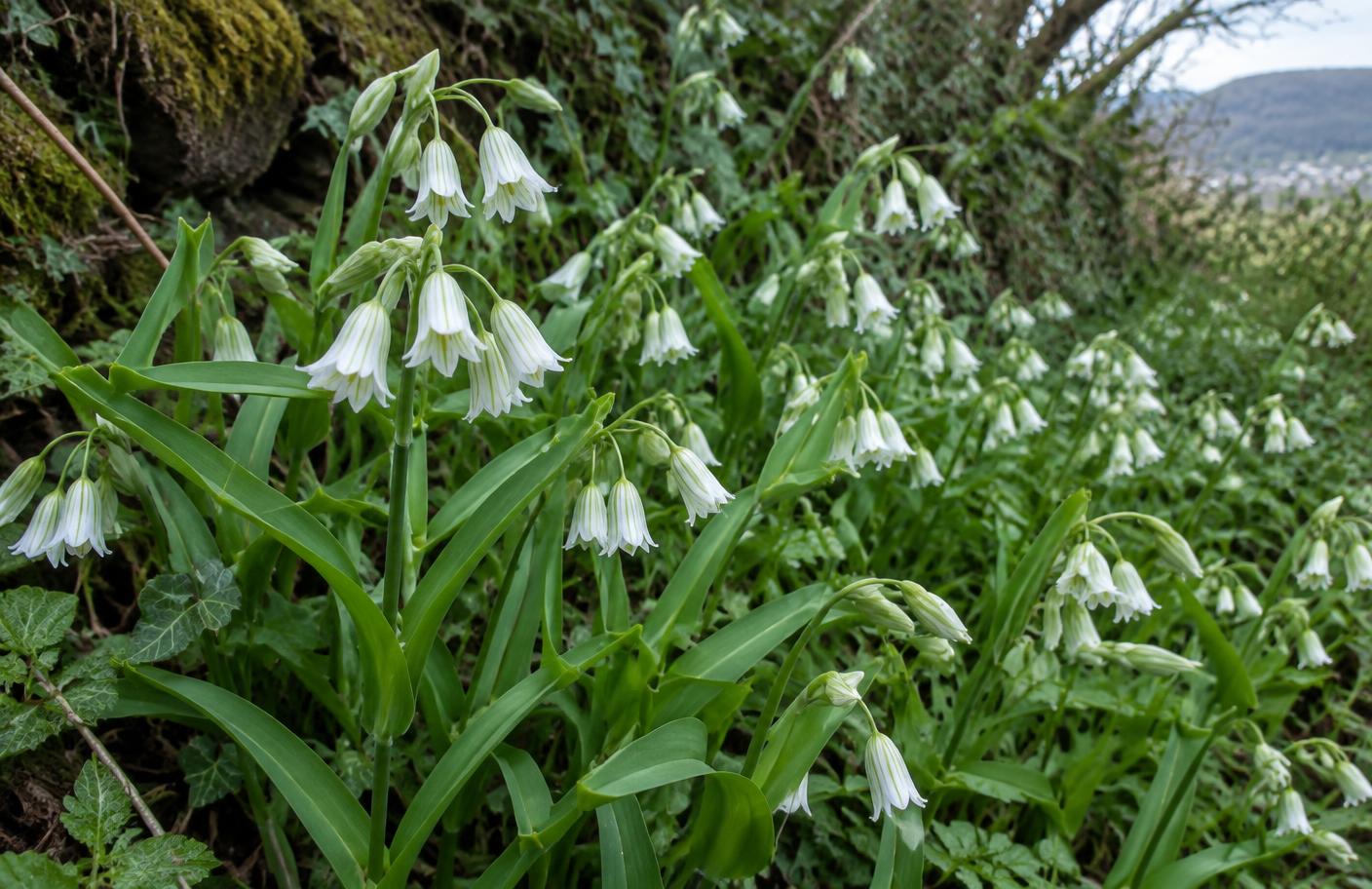
Three-cornered leek
Allium triquetrum
Sometimes picked as wild garlic. It carpets shady verges, churchyards and hedge banks across west Swansea and Gower, replacing native bluebells and celandines.
- Season
- Leaves from December, flowers March–May, dormant in summer
- Where in Swansea
- Uplands and Sketty verges, Brynmill Park edges, Mumbles road banks, and lanes across south Gower.
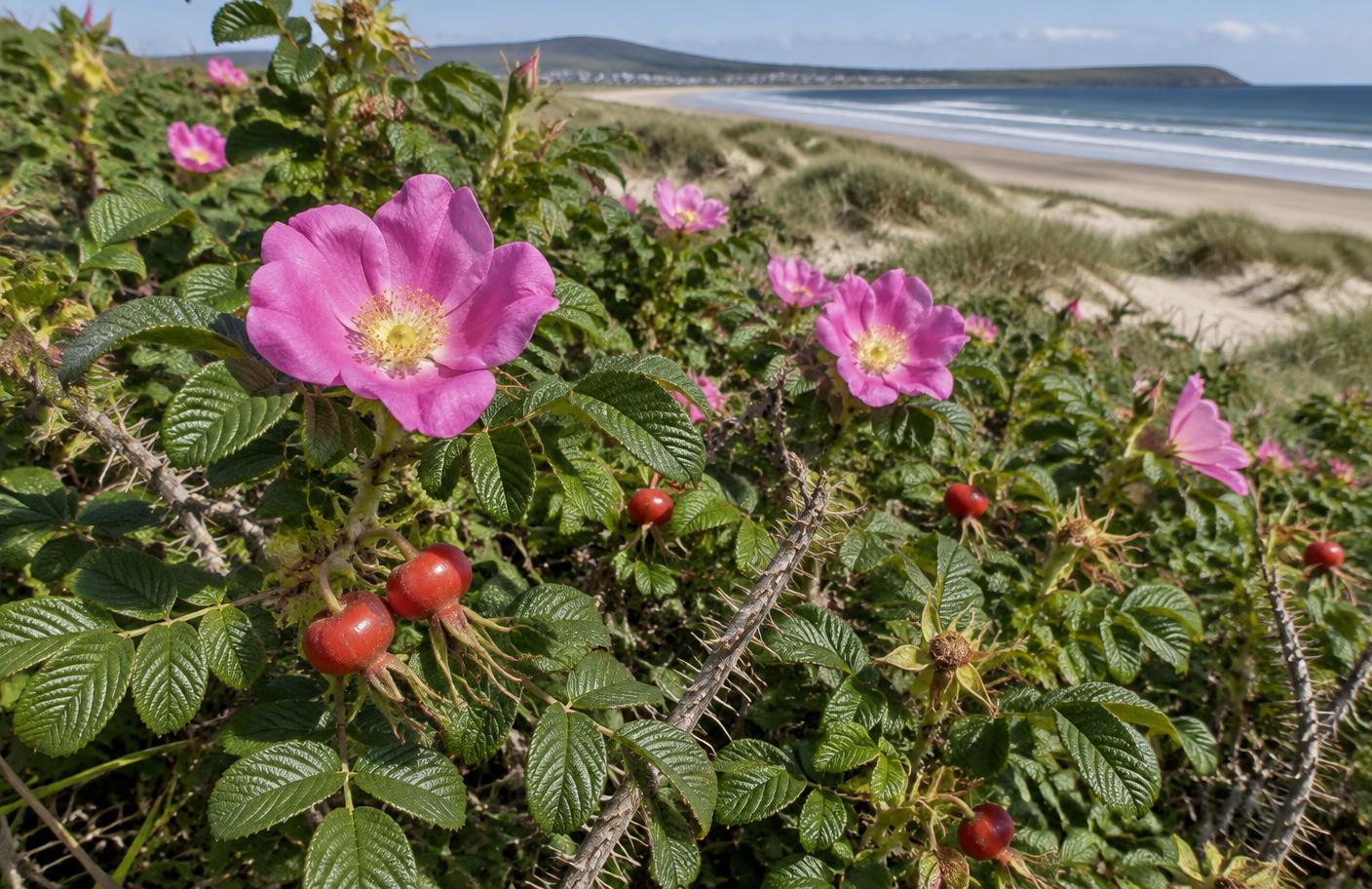
Japanese rose
Rosa rugosa
A thorny dune invader. It binds and over-stabilises mobile sand, which is exactly the wrong thing for Swansea Bay and Gower dune systems that depend on bare sand.
- Season
- Flowers June–September, hips autumn
- Where in Swansea
- Crymlyn Burrows, Swansea Bay dunes near the SA1 fringe, Whiteford and Broughton Burrows.
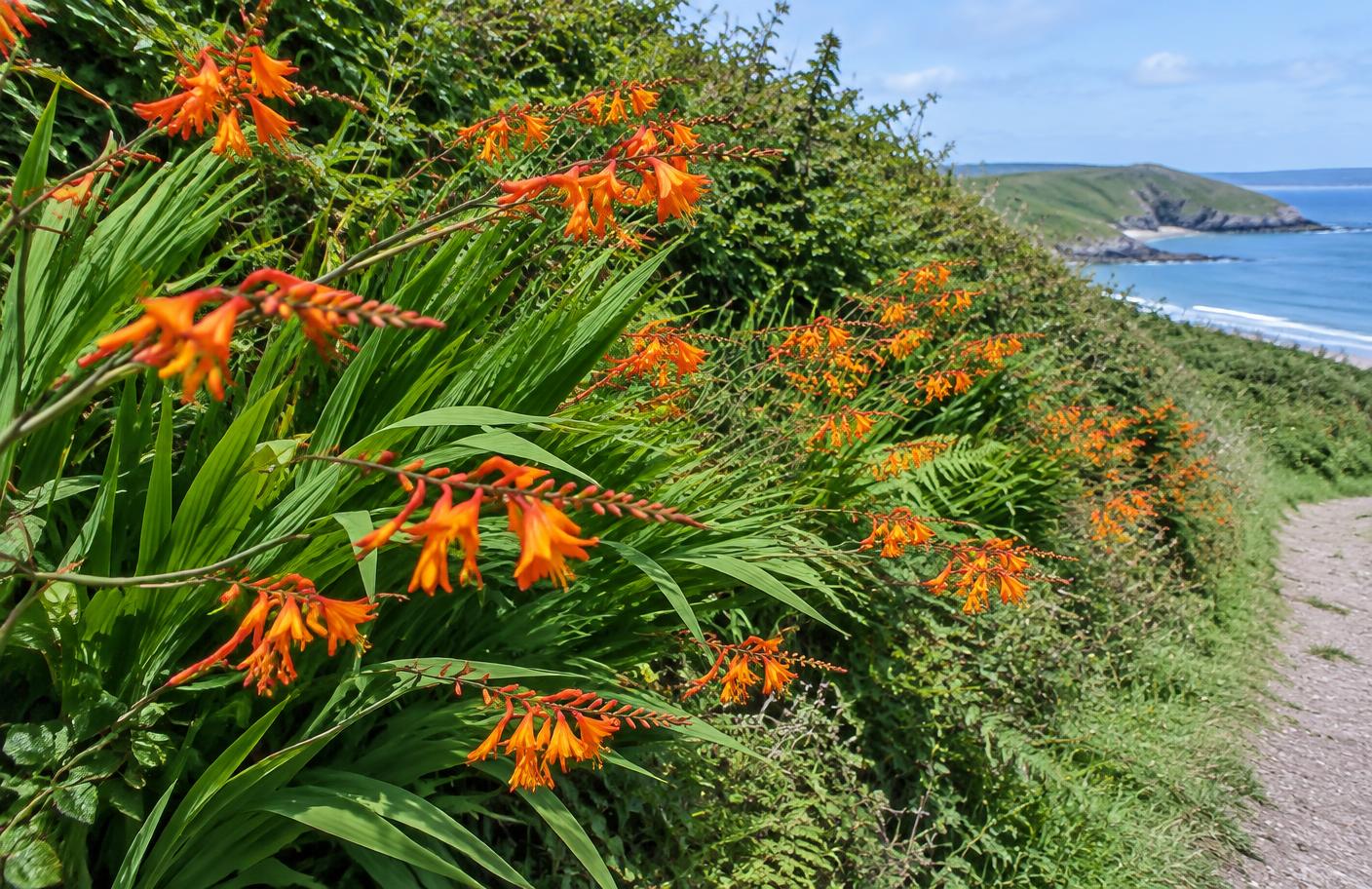
Montbretia
Crocosmia x crocosmiiflora
The orange garden crocosmia that has escaped into hedge banks and coastal paths all over Gower, forming solid corm mats that nothing else grows through.
- Season
- Foliage spring, orange flowers July–September
- Where in Swansea
- Coast path banks from Mumbles to Rhossili, Bishopston and Pennard lanes, Clyne Valley path edges.
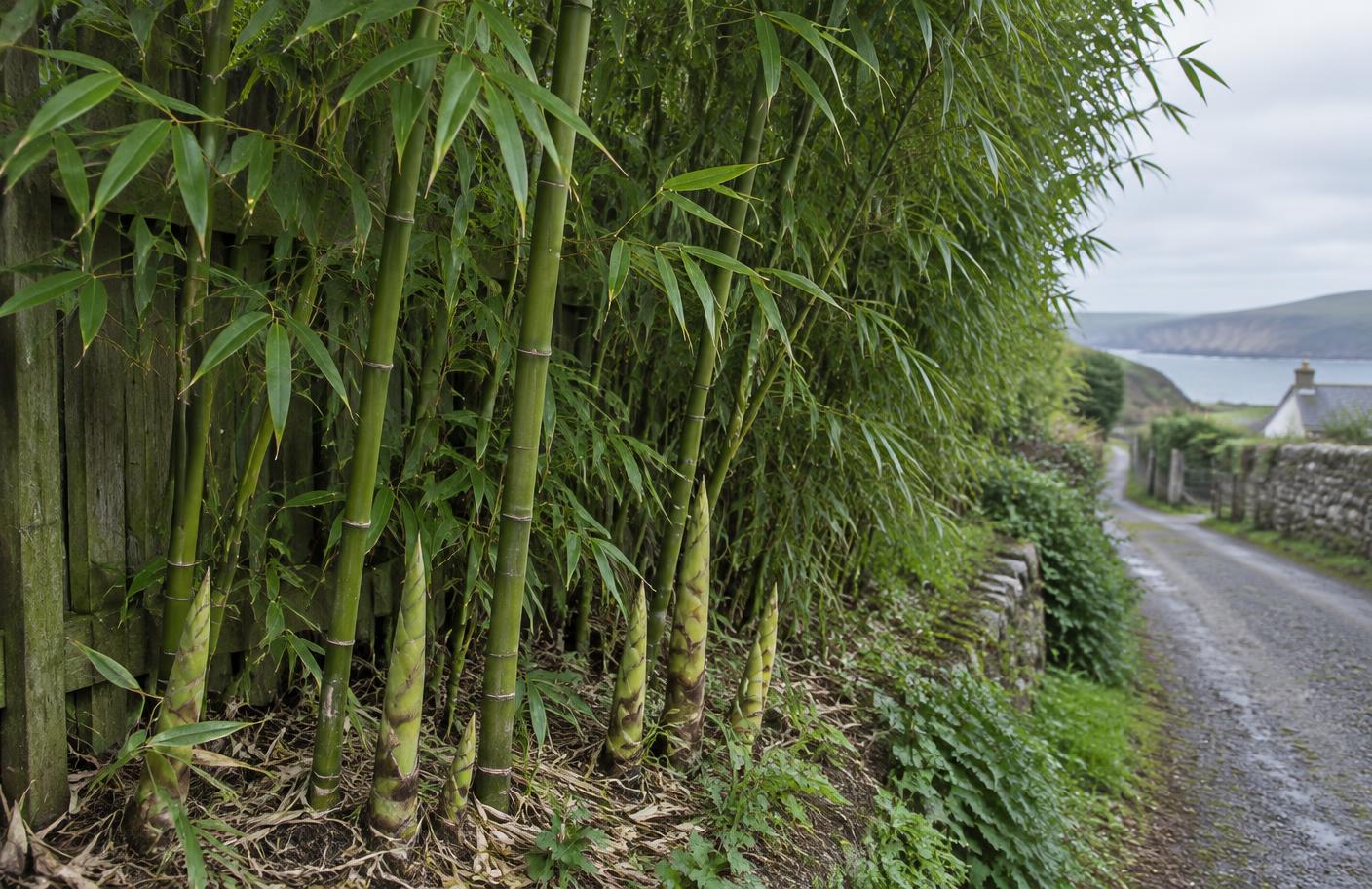
Running bamboo
Phyllostachys and related running species
Increasingly planted as a garden screen, running bamboo behaves like knotweed: its underground rhizomes travel metres under fences, patios and drains, and removal is expensive. Clumping types are far safer, but sellers rarely say which is which.
- Season
- New shoots April–June, evergreen canes year round
- Where in Swansea
- Garden-boundary plantings across Sketty, Killay, West Cross and the Mumbles suburbs; increasingly reported on terraced lanes where a single planting has run the length of a back lane.
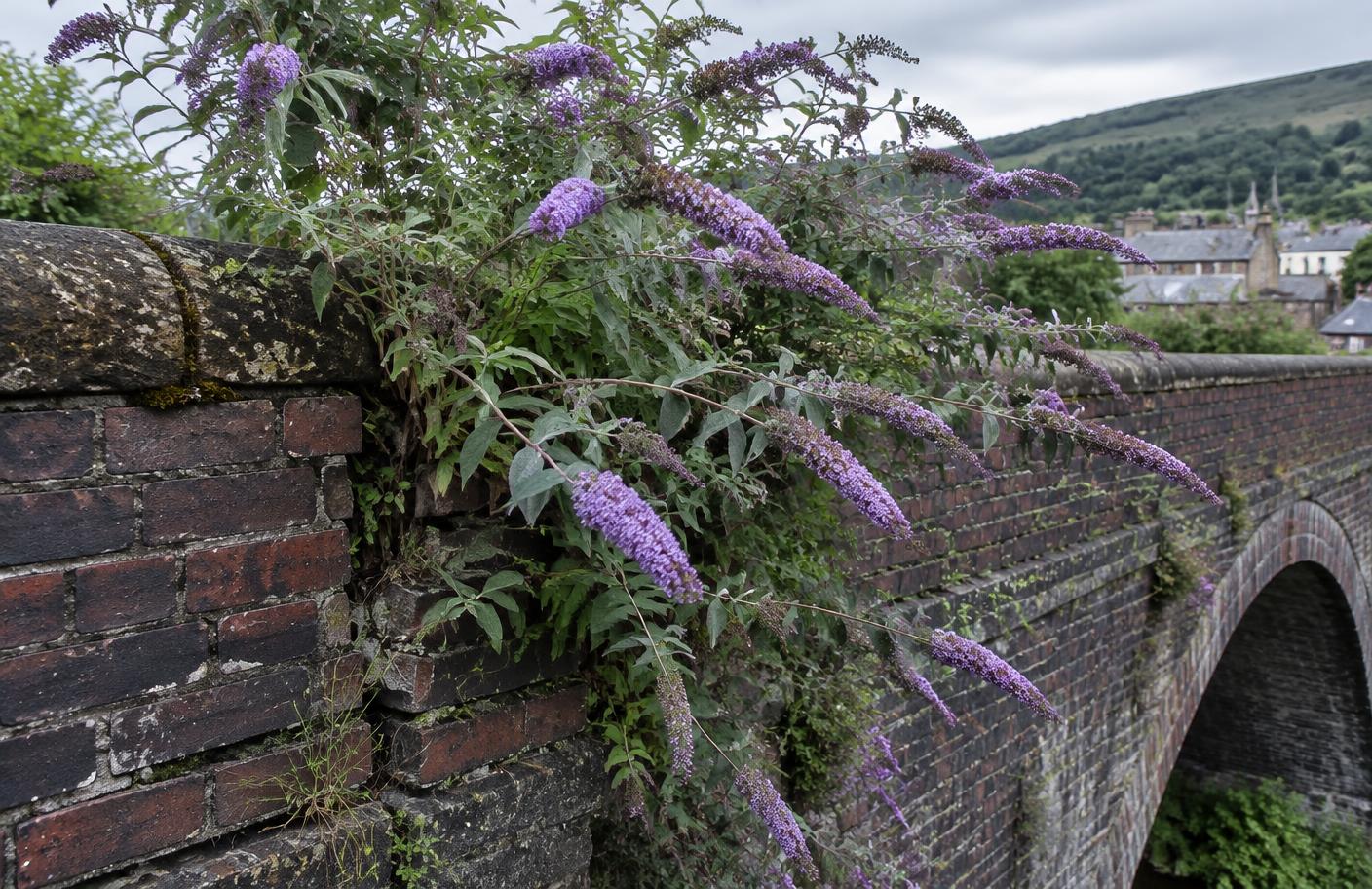
Buddleia (butterfly bush)
Buddleja davidii
The purple butterfly bush that seeds itself into every wall, bridge joint and chimney in Swansea. It is a genuine problem for buildings: roots widen mortar joints and brick cracks, and a mature buddleia can lift coping stones off a bridge parapet.
- Season
- Flowers June–September, seeds into autumn; deciduous
- Where in Swansea
- Bridge parapets and retaining walls along The Strand and Oystermouth Road, railway land behind High Street station, chimneys across Sandfields and Townhill, and every demolition site in the city.
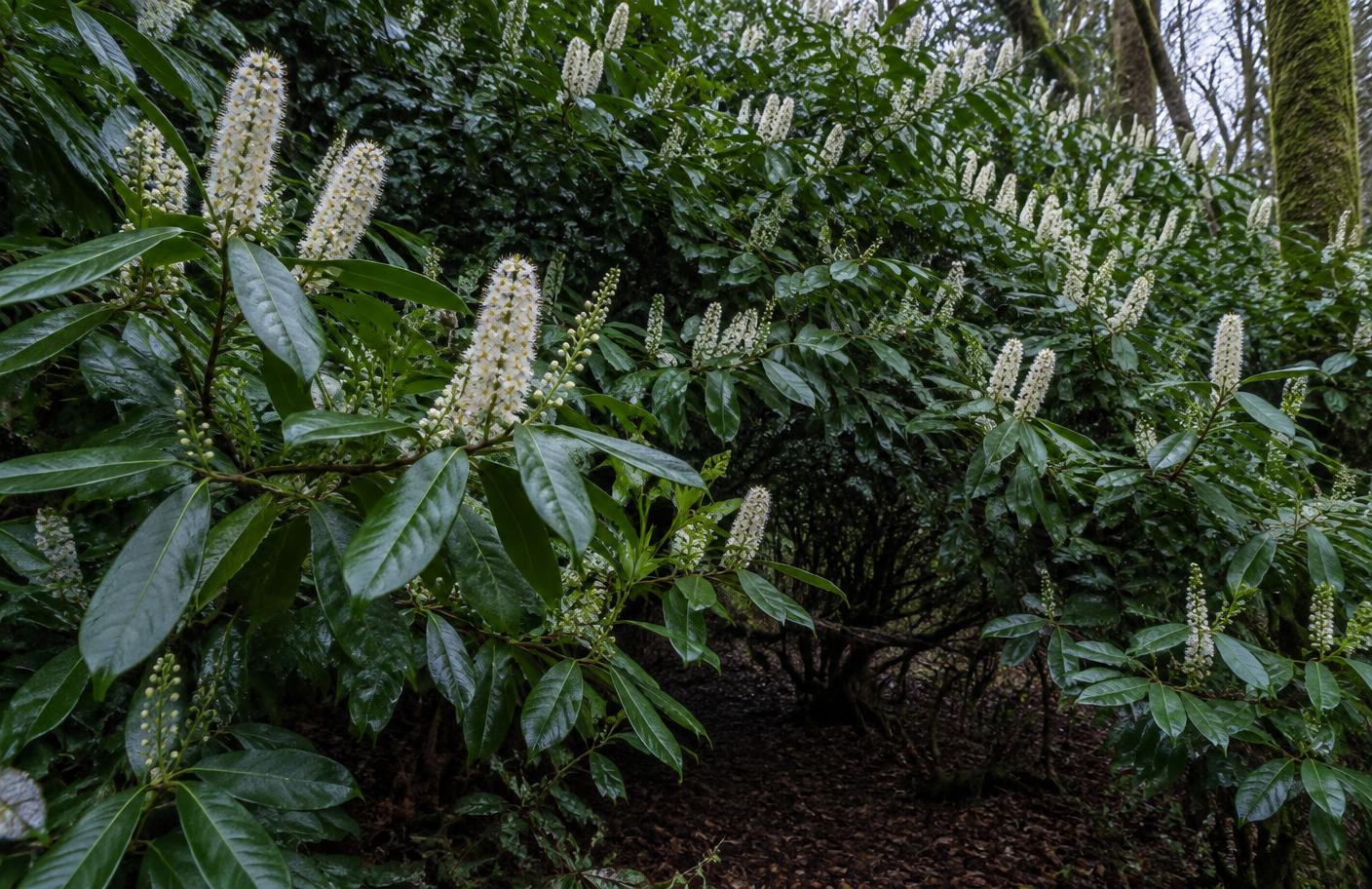
Cherry laurel
Prunus laurocerasus
The common estate hedge that has escaped into Gower and Clyne woodlands. A mature cherry laurel casts shade so deep nothing grows beneath it, and it suckers freely from cut or dumped material.
- Season
- Evergreen; white flower spikes April, berries autumn
- Where in Swansea
- Clyne Valley, Bishopston and Nicholaston woods, Kilvey Hill, and old estate boundaries across Mayals and Blackpill where hedges have gone wild.
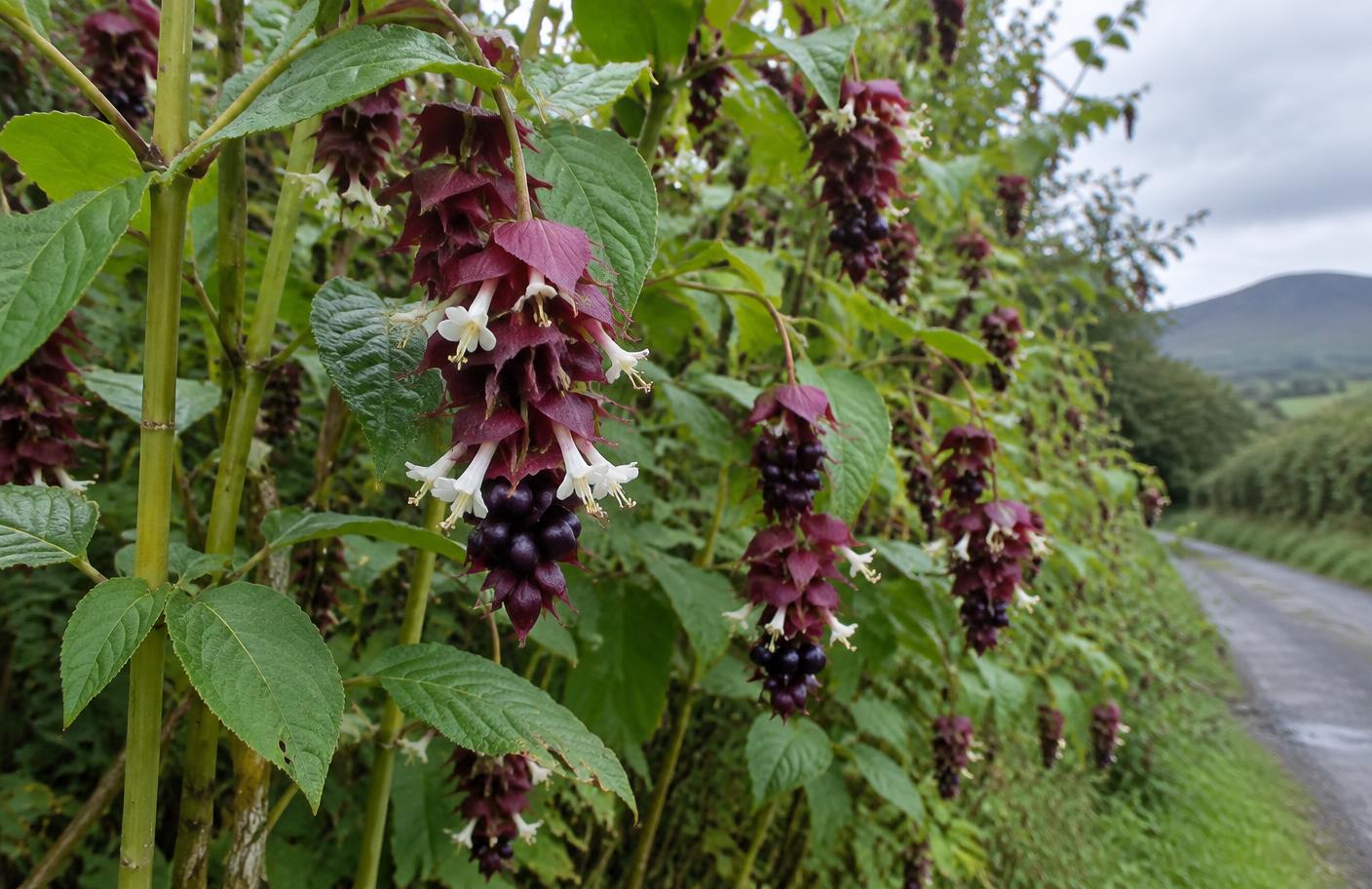
Himalayan honeysuckle
Leycesteria formosa
A garden escape with pendulous maroon-and-white flowers that has jumped from borders into Swansea's lanes and woodland edges, forming dense bamboo-like stands from dropped berries.
- Season
- Shoots April, flowers July–October, dies back in winter
- Where in Swansea
- Hedgerows and woodland edges around Clyne Valley, Mayals and the Gower lanes; increasingly along the old railway paths.
American skunk cabbage
Lysichiton americanus
A pond-garden plant with striking yellow arum flowers that has escaped into wet ground and streamside margins, where it forms dense crowds that swamp native marsh flora.
- Season
- Flowers March–May, large leaves to autumn
- Where in Swansea
- Pond margins and wet hollows in Clyne Valley, ditches on the margins of Parc Wern and Hendrefoilan, and streamside gardens across west Swansea.
New Zealand pygmyweed
Crassula helmsii
A tiny aquarium plant that is one of Britain's most destructive pond invaders. A single fragment regrows into a new mat, and once established in a pond or ditch it is close to impossible to remove without draining.
- Season
- Grows year round, flowers May–October
- Where in Swansea
- Pond and ditch systems across Clyne Valley and the Lliw reservoir margins; a serious risk to Gower's freshwater pools if fragments arrive on boots or dogs.