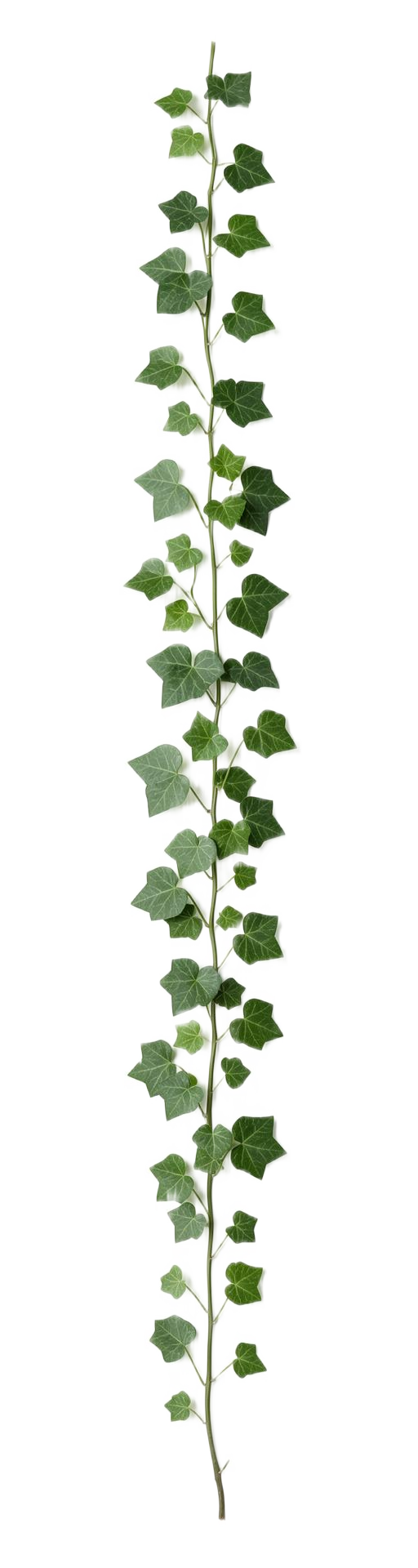
01
Identify
Check the whole plant, stem and habitat. Similar-looking plants can need completely different treatment.
How to control weeds
A Swansea field plan for choosing the lightest effective method, protecting the surrounding habitat and returning for long enough to make it work.
The control sequence
Good control begins before a tool or spray comes out. The aim is not bare ground; it is less spread and a healthier habitat afterwards.
Check the whole plant, stem and habitat. Similar-looking plants can need completely different treatment.
Photograph the stand and mark its edges before work starts. Record water, paths, boundaries and wildlife nearby.
Stop seed, roots, fragments and contaminated soil leaving the site. Clean footwear, tools and machinery before moving on.
Pull, cut or dig where that method is suitable. Use precise herbicide only where it offers the safer, more effective result.
Control is a cycle, not a single visit. Revisit in the right season and keep records until regrowth has stopped.
Species field cards
These methods reflect official Welsh invasive-species guidance. Swansea Council directly offers a quoted treatment service for Japanese knotweed; that does not mean every method below is a Council service.
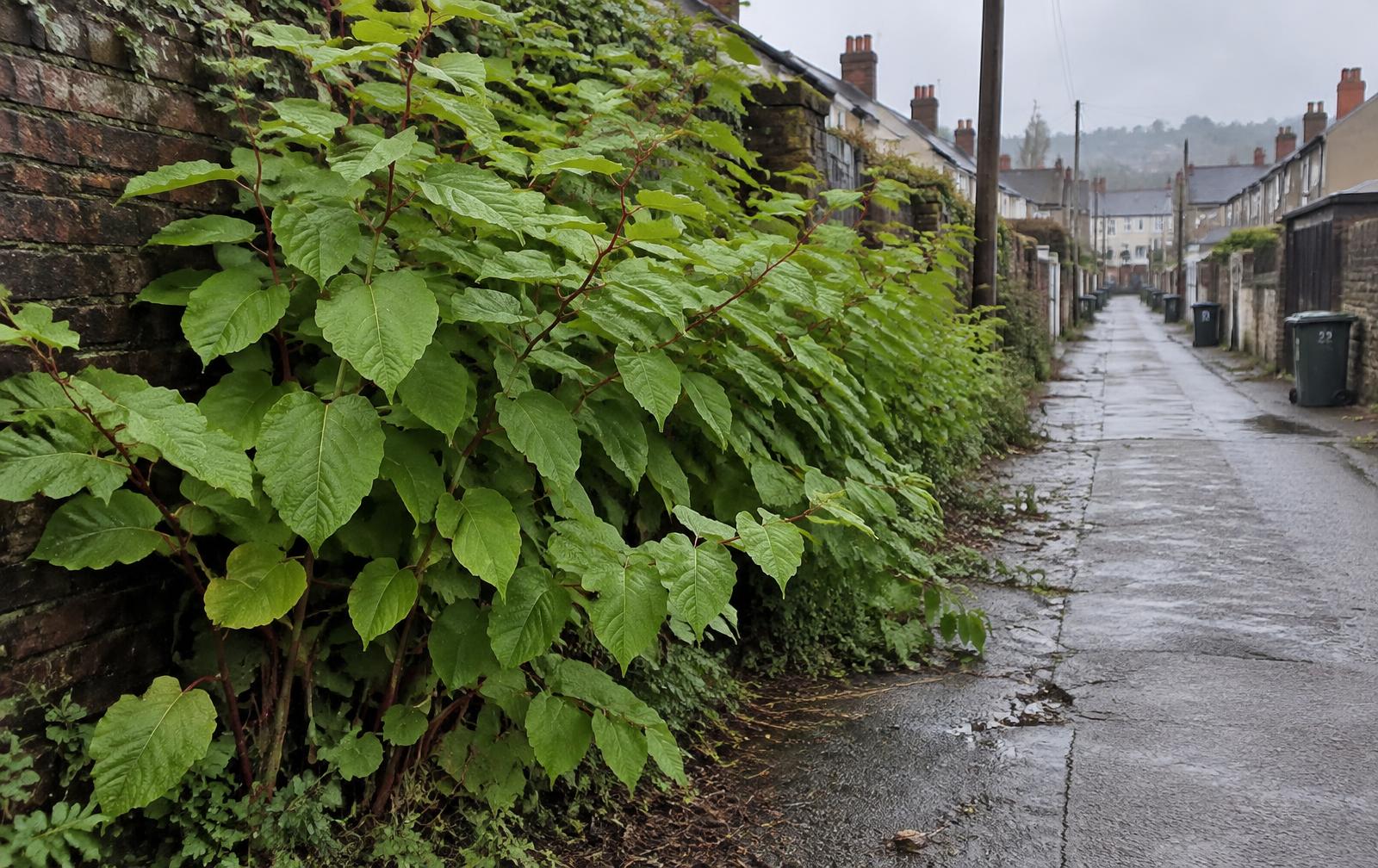
Reynoutria japonica
A multi-year professional management plan is usually the lowest-risk route. Targeted glyphosate is commonly applied in late summer or early autumn, when the plant is moving energy into its underground rhizomes. Stem injection may reduce drift near sensitive plants. Excavation is specialist work because tiny rhizome fragments can regrow.
Leave canes and soil in place until a plan explains how they will be treated. Keep machinery out of the stand and protect nearby water and native vegetation.
Survey in spring; professional treatment is commonly timed for late summer into autumn.
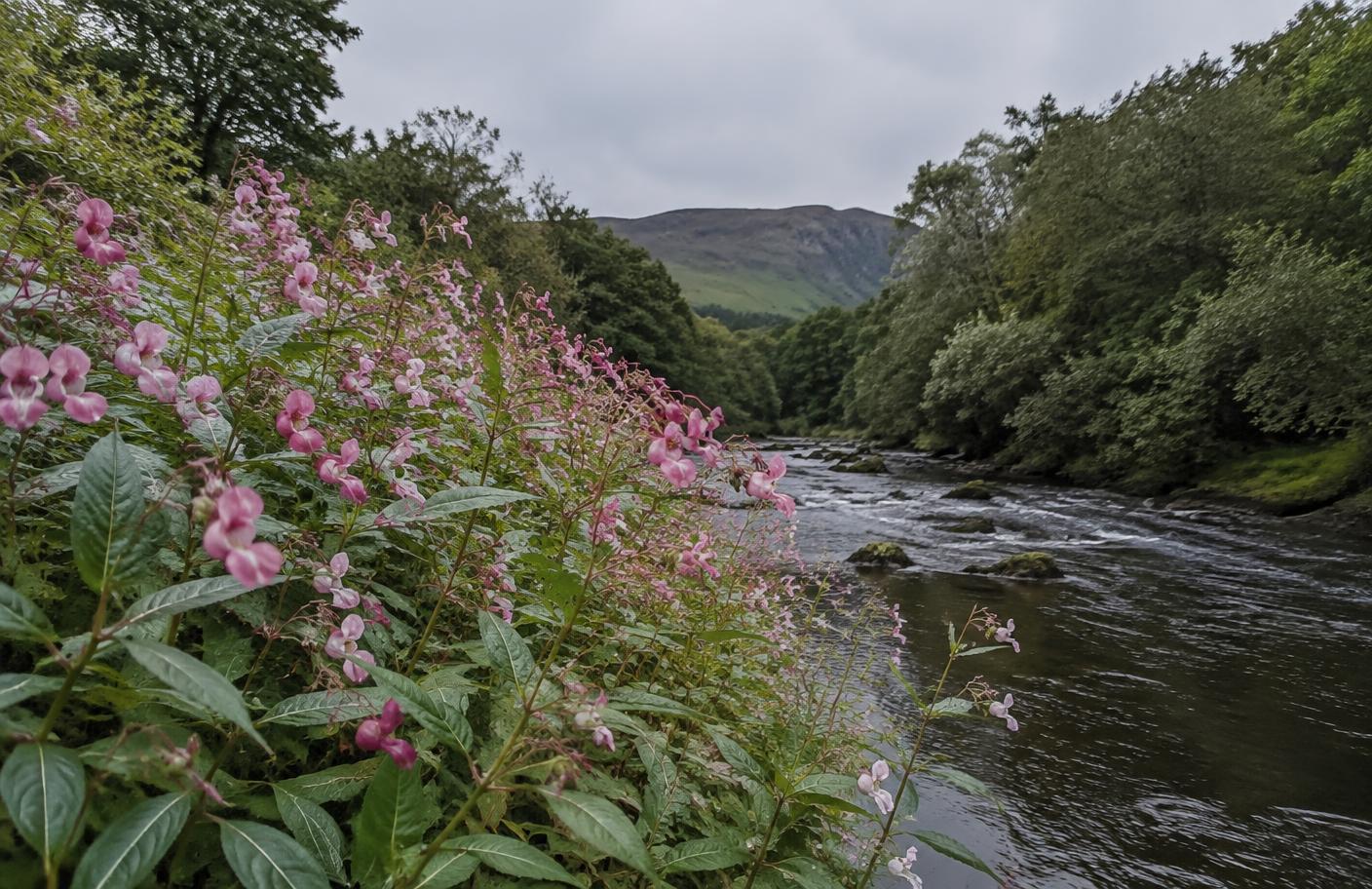
Impatiens glandulifera
Small stands can be hand-pulled because the roots are shallow. Pull below the lowest node, or cut low enough to prevent regrowth. Work upstream to downstream on connected watercourses and repeat through the season.
Check for nesting birds and avoid trampling river margins. Plants without ripe seed can be gathered safely on site in a dry position away from water; never carry seeding plants through clean habitat.
May to July, before seed pods mature. Recheck later germination and return in following years.
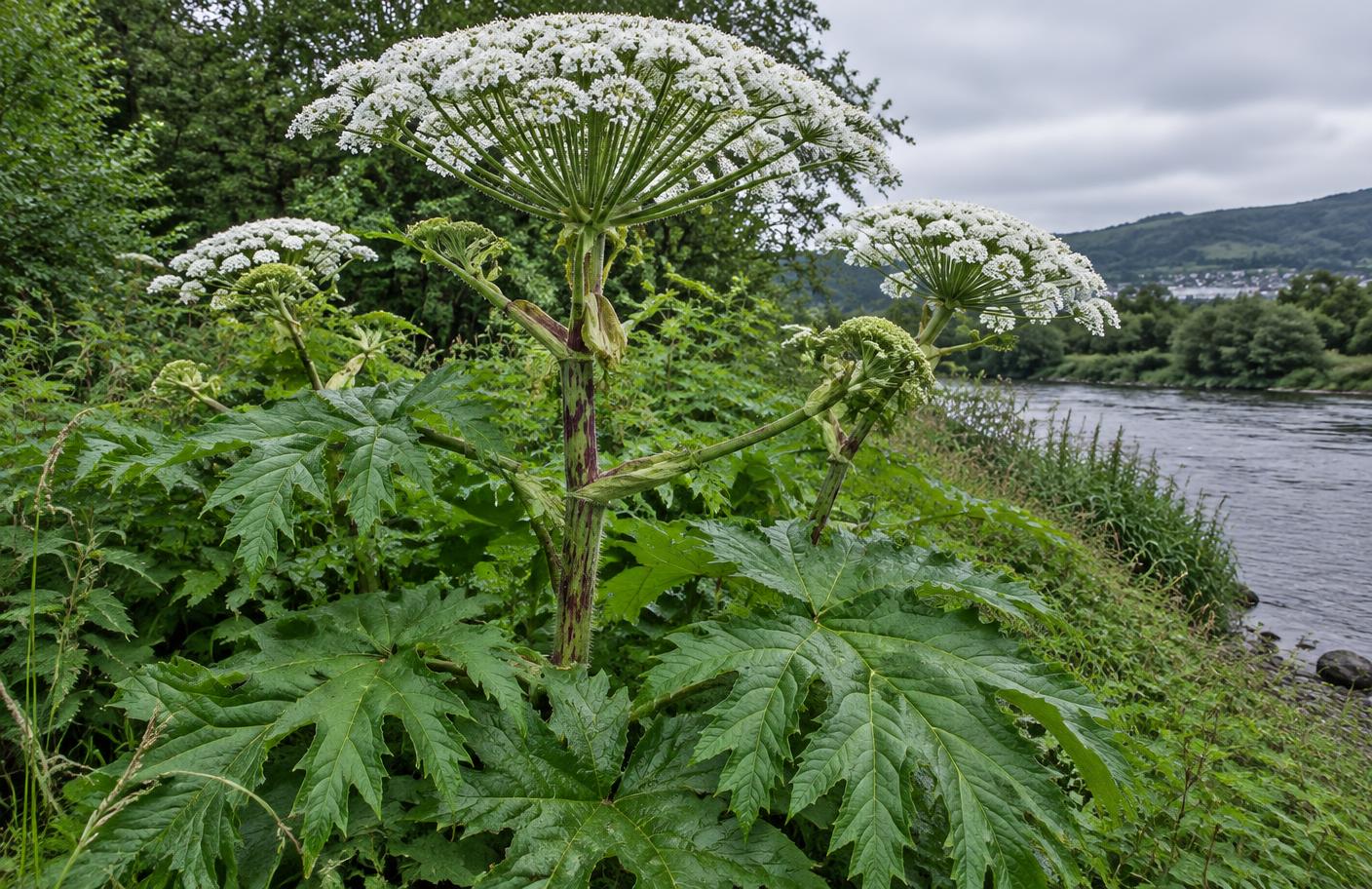
Heracleum mantegazzianum
Keep people and pets back and use a trained contractor. Official Welsh guidance includes carefully cutting the taproot below ground or professional herbicide treatment while plants are small. Seed heads need expert handling.
Its sap can cause severe, long-lasting skin blistering after sunlight exposure. Avoid cutting methods that throw sap, and never organise an untrained volunteer clearance.
Act in early spring before flowering, with follow-up visits for seedlings and missed plants.
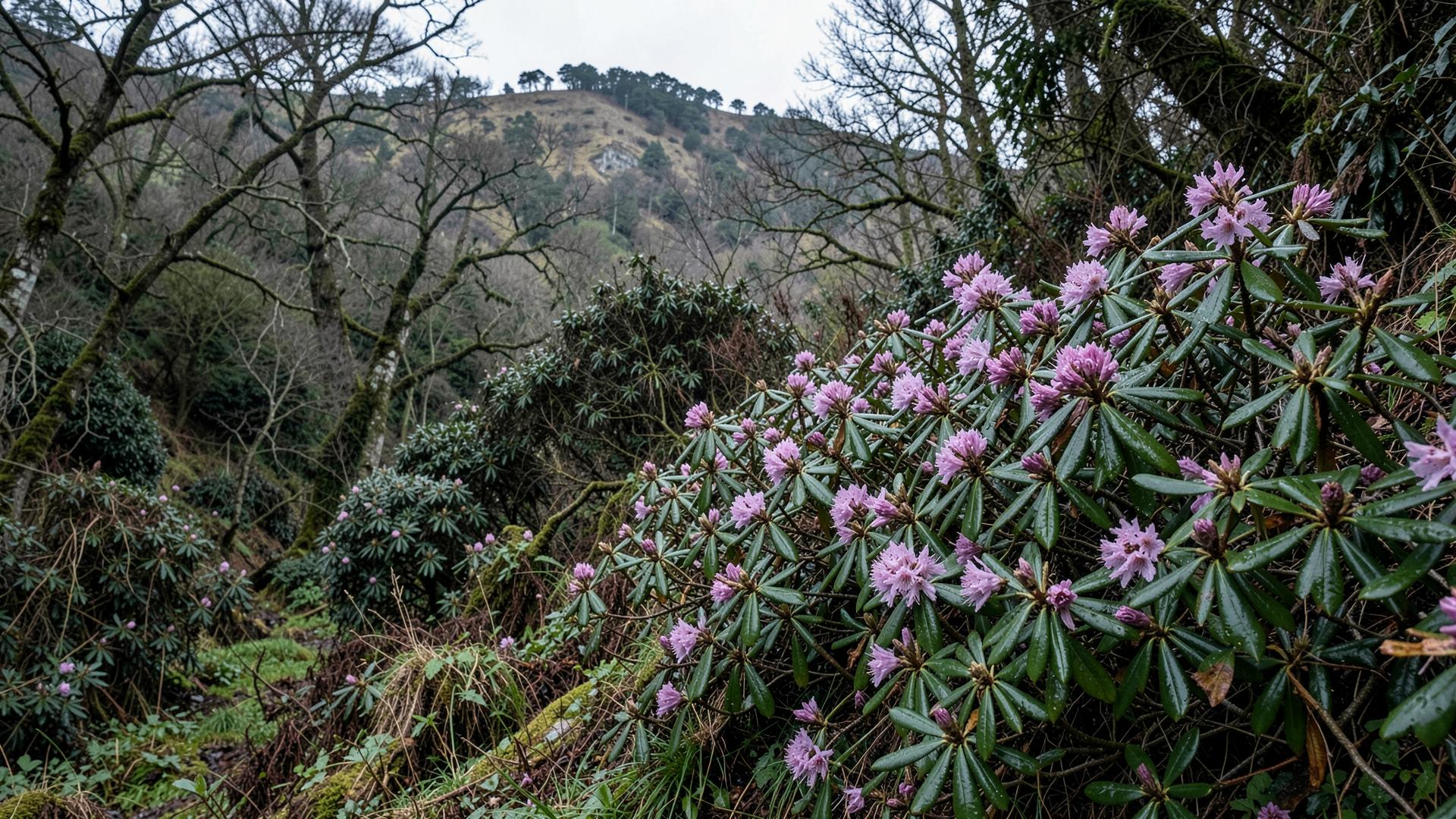
Rhododendron ponticum
Young plants can be pulled with the full root where soil disturbance is acceptable. Larger shrubs are normally cut and the fresh stump treated precisely, or treated by stem injection. Follow-up is essential because cut stumps reshoot and buried seed can germinate after clearance.
Clear in phases where dense cover shelters wildlife, retain native trees and restore the exposed ground. Clean tools and boots before moving between woodland sites.
Survey before work; avoid active bird nests. Treat fresh stumps in suitable dry weather and monitor for years.
Eco does not mean ineffective
Some invasive plants are more safely and effectively controlled with carefully targeted herbicide than by repeated cutting or soil disturbance. Choose the correct product, dose, timing and application method; protect water, non-target plants and wildlife; and use a qualified professional where the label, location or scale demands it.
Professional pesticide use in or near water may need Natural Resources Wales agreement. Never allow spray, soil or cut material into a drain, brook, river or wetland.
Japanese knotweed material and affected soil are controlled waste. Do not put them in household or garden waste, compost them, fly-tip them or take them to an ordinary recycling site.
Only work on land you own or manage, or where the landowner has agreed. Do not cross a boundary to treat a neighbour’s plants.
Checked 14 September 2026
Swansea Council’s published service is specifically for Japanese knotweed and is chargeable after a free site quote. The broader methods on this page come from official Welsh and UK invasive-species guidance.