Community sightings
Swansea weed sightings map
Pin where you've seen an invasive plant, add photos, and get a gentle control plan for it. Sightings appear on the map after a quick check.
Showing 1 approved sightings of every weed. "+" is the spot you're reporting. Locations are approximate — never enter private land to look. The numbers in the buttons and on the green dots include published report totals found online (for example 936 knotweed reports in Swansea city); approved visitor sightings are counted on top of those.
Found online
Places named in news, council and community sources. Positions are approximate.
Clyne Valley Country Park
Japanese knotweed
Knotweed described as prevalent, including in ancient woodland; volunteers mapped it for council treatment.
Clyne Valley Community Project, 2022Tir Canol, River Tawe (Morriston)
Japanese knotweed · Himalayan balsam
Knotweed cut and put on a treatment plan along the Tawe fishing banks.
Pontardawe & Swansea Angling Society, 2025Pleasant View Terrace, North Hill
Japanese knotweed
Knotweed reported spreading into a garden from the neighbouring property.
WalesOnline, 2023Clydach, Swansea Valley
Himalayan balsam
Control work against Himalayan balsam reported in the Clydach area.
WalesOnline, 2013Swansea city (936 knotweed records)
936Japanese knotweed
Ranked third in Wales for verified knotweed sightings on the Environet heatmap.
Swansea Bay News / Environet, 2025Llanelli (693 knotweed records)
693Japanese knotweed
Fourth-worst place in Wales for verified knotweed sightings.
Swansea Bay News / Environet, 2025Neath (396 knotweed records)
396Japanese knotweed
Sixth-worst place in Wales for verified knotweed sightings.
Swansea Bay News / Environet, 2025Swansea Canal, Clydach
Rhododendron ponticum
Invasive rhododendron ponticum spreading along the canal bank opposite Mond Valley Golf Course; cleared by boat volunteers.
Swansea Canal Society, 2013South Gower cliffs (Port Eynon to Rhosili)
Wall cotoneaster
Cotoneaster smothering rare coastal wildflowers including yellow whitlowgrass; National Trust and Plantlife removed it from around 10 hectares of cliffs.
BBC News / Plantlife, 2014Gower coastline (National Trust)
Wall cotoneaster
Specialists abseiled cliffs to reach cotoneaster threatening juniper and other rare plants, in an £86,000 removal campaign.
WalesOnline / National Trust, 2014Ammanford
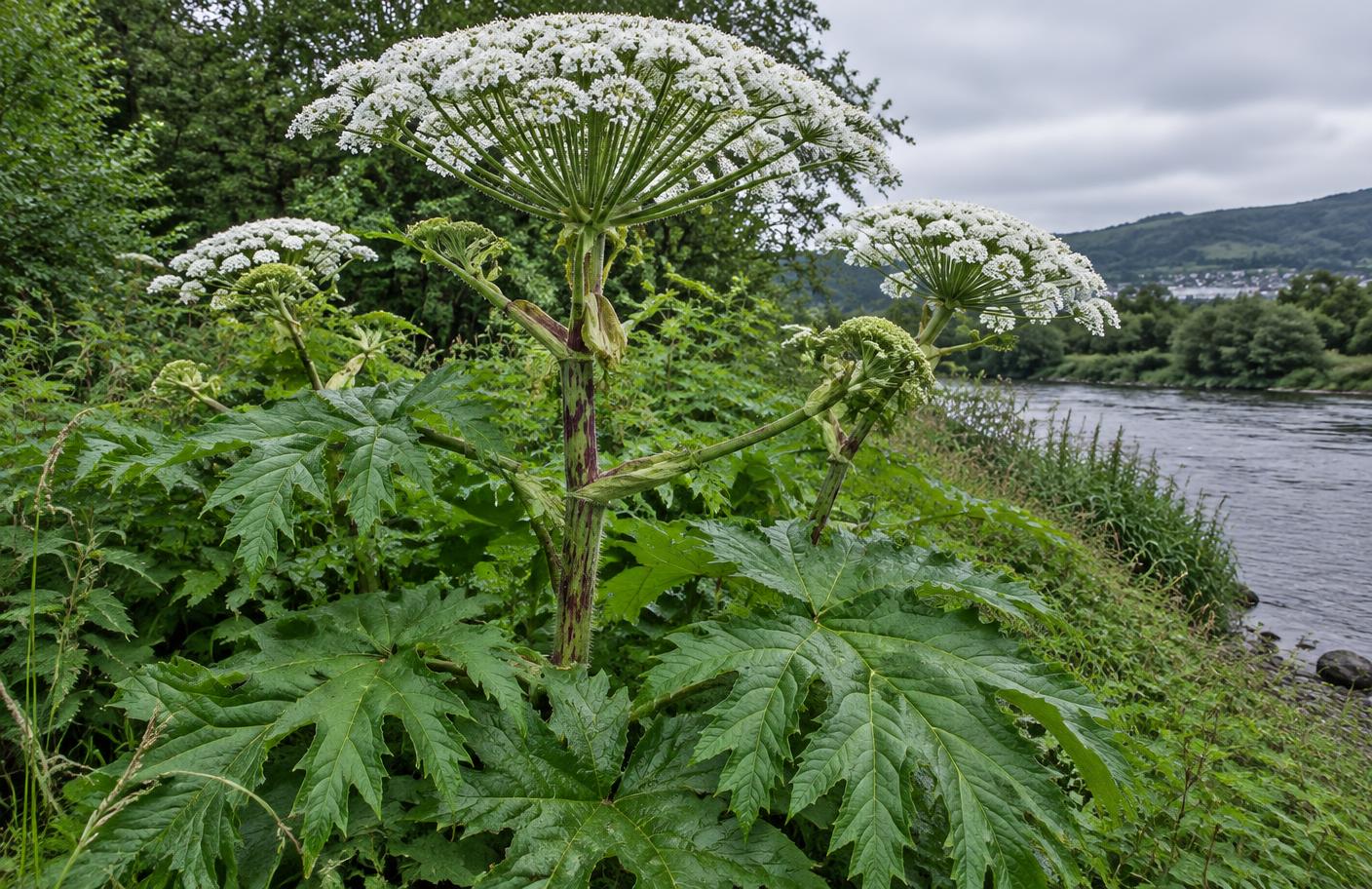
Giant hogweed
A gardener was hospitalised with severe burns after strimming giant hogweed; reported as a warning to others in the area.
WalesOnline, 2018River Teifi, Lampeter
Himalayan balsam
Extensive balsam along the Dulas tributary; volunteers cleared 300 metres of riverbank in the first balsam blitz.
Natural Resources Wales, 2024River Tywi, Llandeilo
Himalayan balsam
Three-year eradication project clearing balsam from Tywi tributaries, working from the top of each tributary downstream.
West Wales Rivers Trust, 2024River Cleddau, Haverfordwest
Himalayan balsam
Balsam removal on Cleddau tributaries as part of the Four Rivers for LIFE project, with volunteers wanted around Haverfordwest and Maenclochog.
West Wales Rivers Trust, 2024River Loughor (Llwchwr), upper reaches
Himalayan balsam
Balsam reported on riverbanks and gorges near Llygad Llwchwr; walkers asked to uproot plants before they set seed.
South Wales Outdoor Activity Providers Group, 2026
Control plan
Japanese knotweed: an eco-first plan
Guidance based on Swansea Council and UK government advice — not an official council-approved plan. For a council treatment quote, see the council page.
- 01
Confirm the plant
Check the key features of Japanese knotweed against the identification guide before acting.
- 02
Mark and leave it
Record the stand's size and edges. Do not cut, strim, dig or move soil while you plan.
- 03
Contain fragments
Keep cuttings, seed heads and soil on site. Never compost or fly-tip invasive material.
- 04
Act lightly
Use the least-harmful effective method below. Targeted herbicide only where it is genuinely needed, by a qualified person near water.
- 05
Return and check
Revisit each season. Most invasive stands need several years of follow-up.
Methods for this plant
- Do not cut, strim, dig or fly-tip it — every fragment can start a new stand
- Glyphosate applied to leaves in late summer, before die-back, repeated for 3–5 seasons
- Stem injection near water or in gardens where spray drift matters
- Excavation and licensed off-site disposal, or on-site burial under a management plan, for development sites
- Insurance-backed treatment plans are what lenders normally ask to see
The law
It is an offence to plant it or cause it to grow in the wild. Allowing it to spread onto a neighbour's land can be a private nuisance, and cut material is controlled waste under the Environmental Protection Act 1990.