Water & wetland guide
Aquatic weeds in Swansea's streams, ponds and ditches
Water carries fragments and seed for miles. The two plants that actually live in the water — and everything that crowds a riverbank — need a different, lighter-touch approach.
In the water
Two plants that live in the water
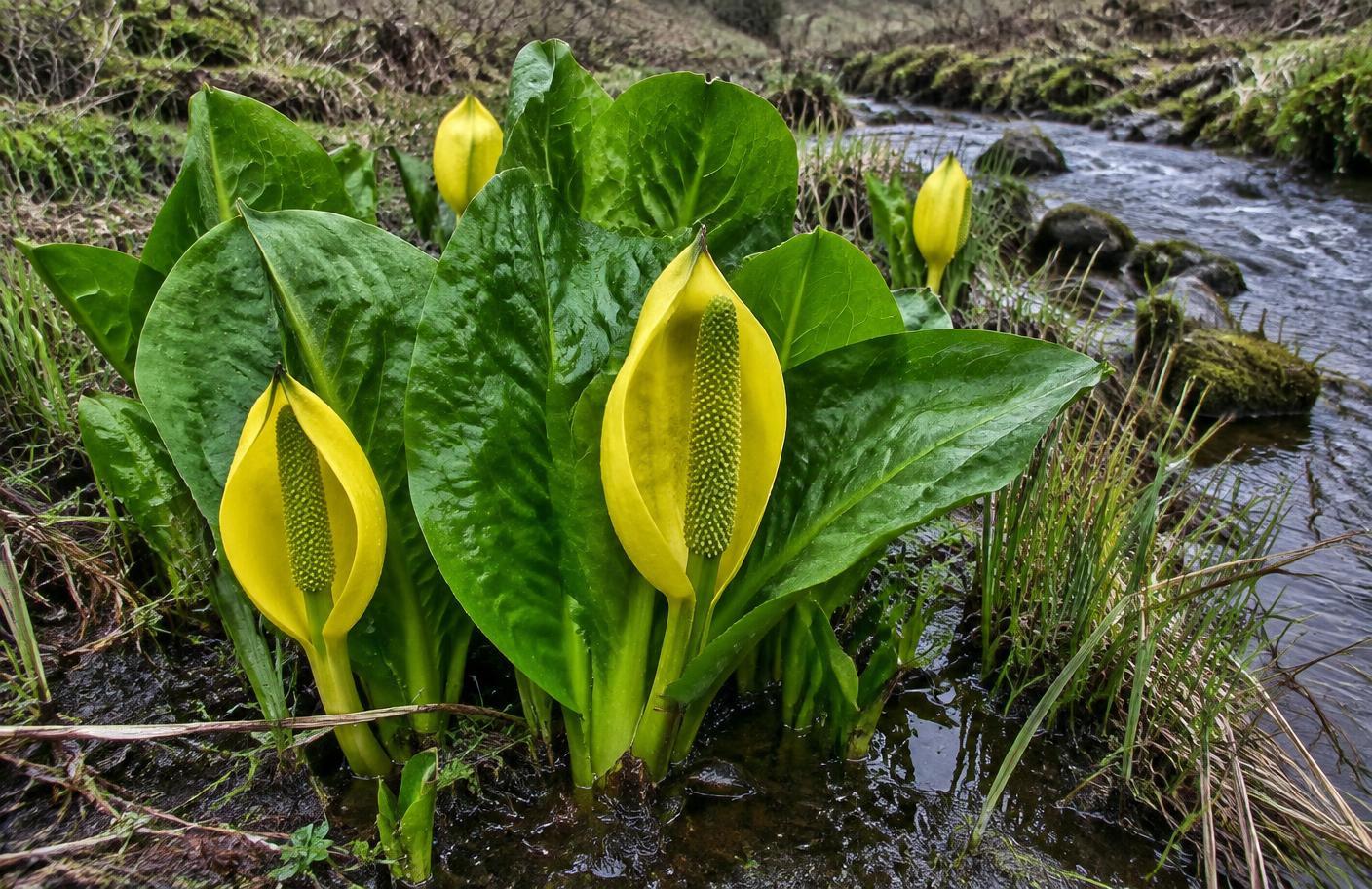
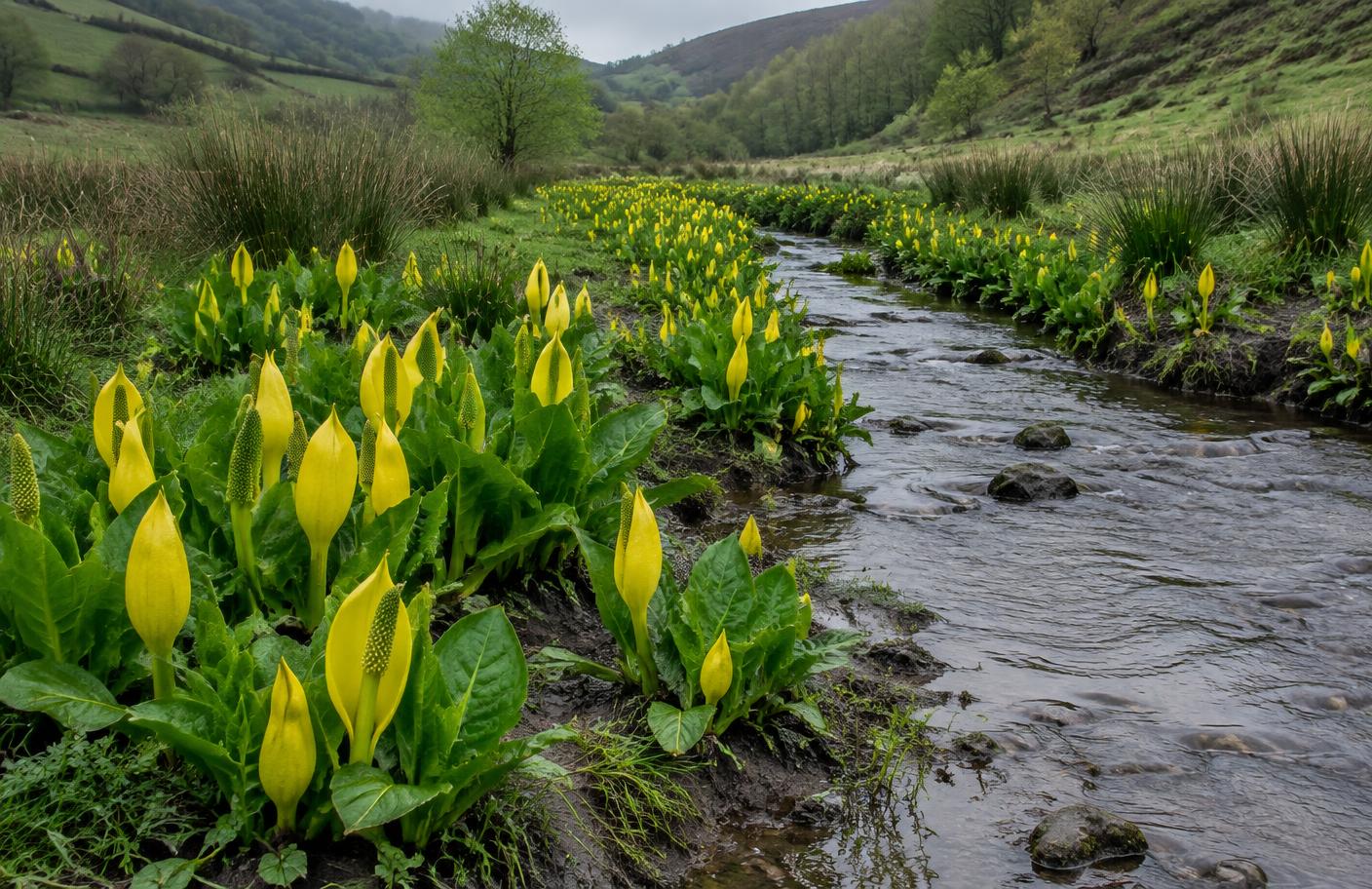
American skunk cabbage
Lysichiton americanus
A pond-garden plant with striking yellow arum flowers that has escaped into wet ground and streamside margins, where it forms dense crowds that swamp native marsh flora.
- · Large yellow hooded flower like a skunk in shape and smell, March–May
- · Huge cabbage-like leaves up to 1m long on thick stems
- · Growths in wet ground, pond edges and stream margins
- · Seed spikes turn brown and shed hundreds of seeds in summer
In Swansea: Pond margins and wet hollows in Clyne Valley, ditches on the margins of Parc Wern and Hendrefoilan, and streamside gardens across west Swansea.
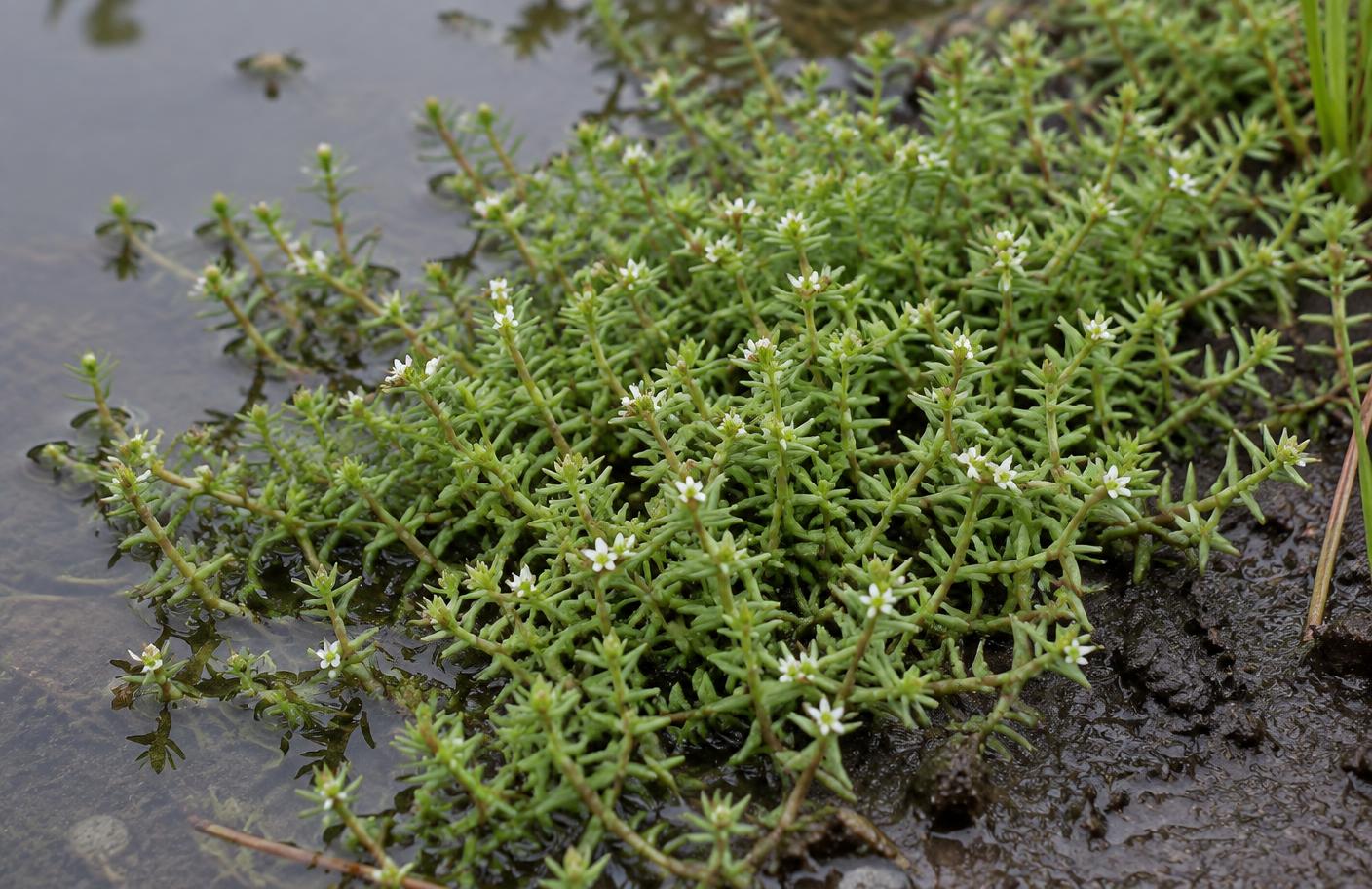
New Zealand pygmyweed
Crassula helmsii
A tiny aquarium plant that is one of Britain's most destructive pond invaders. A single fragment regrows into a new mat, and once established in a pond or ditch it is close to impossible to remove without draining.
- · Tiny succulent carpet of pale green stems over mud and shallow water
- · Needle-thin leaves in opposite pairs, 4–10mm
- · Small white flowers on short stalks in summer
- · Grows both submerged and as a dense mat over damp mud
In Swansea: Pond and ditch systems across Clyne Valley and the Lliw reservoir margins; a serious risk to Gower's freshwater pools if fragments arrive on boots or dogs.
On the bank
Riverbank invaders
These two grow in damp ground and on watercourse banks rather than in the water itself — but their seeds and fragments travel downstream, so clearing them needs the same care.
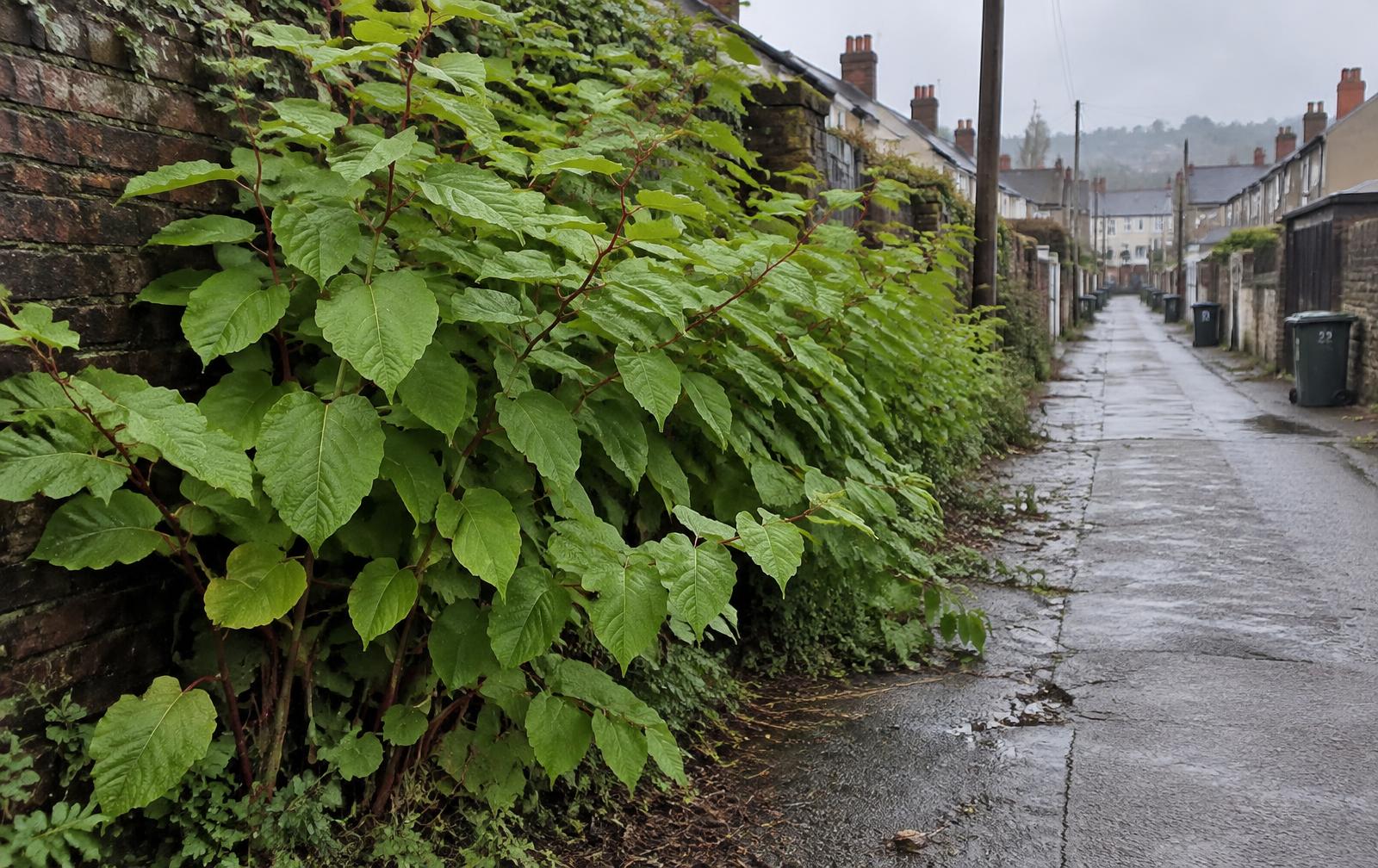
Japanese knotweed
Fallopia japonica
Swansea is one of the worst-affected places in Britain. Knotweed dominates back lanes, railway embankments, riverbanks and derelict plots across the city, and it is the weed most likely to affect a mortgage or a sale.
Control: Do not cut, strim, dig or fly-tip it — every fragment can start a new stand Glyphosate applied to leaves in late summer, before die-back, repeated for 3–5 seasons
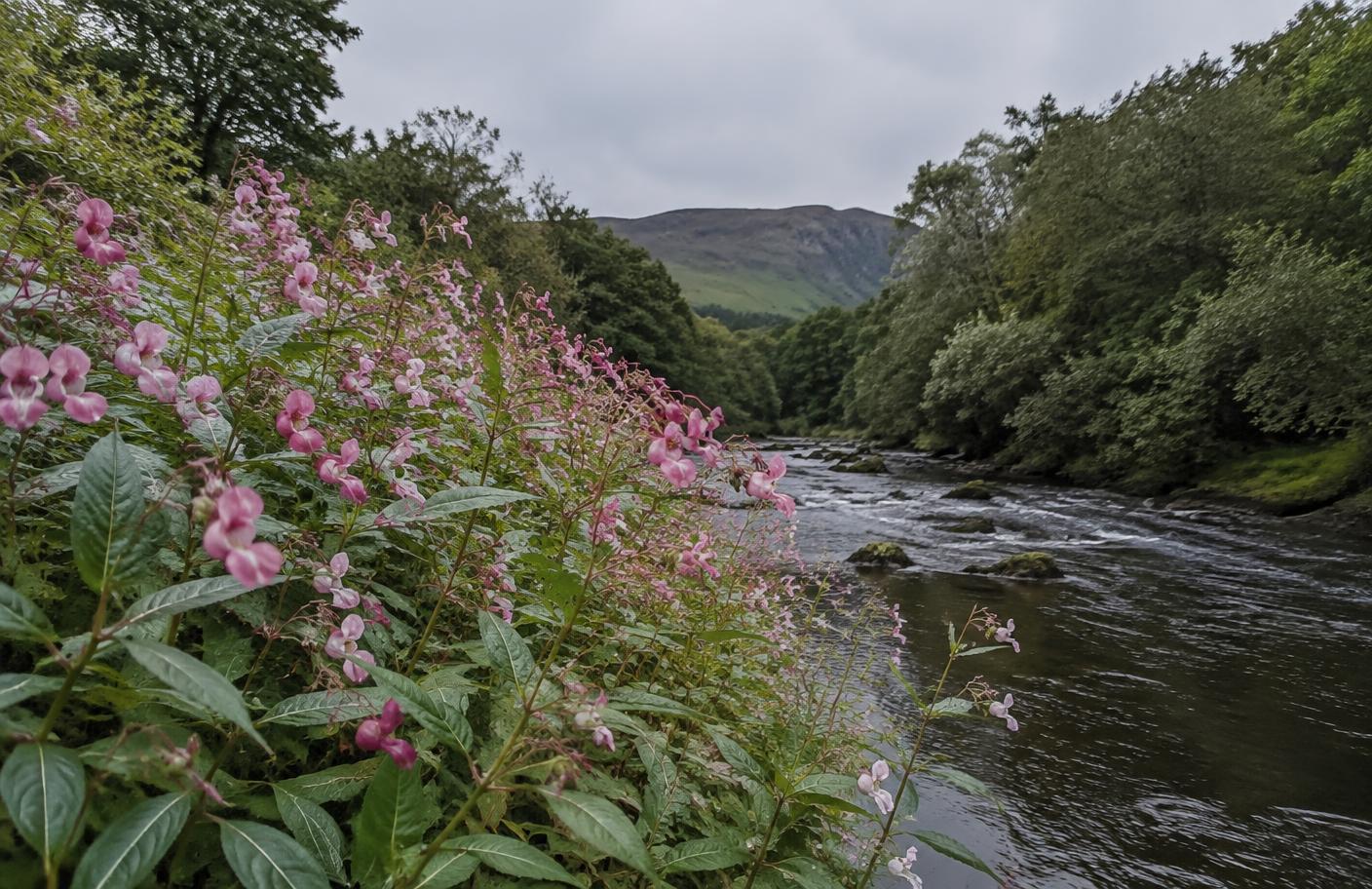
Himalayan balsam
Impatiens glandulifera
The pink-flowered annual that lines almost every stream in Swansea. One plant throws up to 2,500 seeds and the seed floats, so a single upstream patch reseeds miles of bank.
Control: Hand-pull or scythe before flowering — pull below the lowest node Always work from the top of the catchment downstream, or you will be reinvaded
The law near water
Rules you must not break
- Schedule 9: it is an offence to plant, or cause to grow, skunk cabbage, pygmyweed or balsam in the wild — that includes a stream, ditch or pond that connects to the wild.
- Never tip pond or aquarium waste outdoors. Emptying a pond or fish tank into a ditch, drain or stream is the single most common way pygmyweed arrives at a new site.
- Ask before clearing a watercourse. Dredging, cutting or spraying in or near a stream needs Natural Resources Wales approval — call 0300 065 3000 (24 hours) before you act.
- Controlled waste: pulled material must be bagged, never composted or fly-tipped, and disposed of as controlled waste.
The eco way near water
Lightest touch first
- 1. Record before you cut. Photograph the plant and its position — a downstream population often starts upstream of a new colony.
- 2. Never cut into the water. Every fragment of balsam stem, skunk cabbage root or pygmyweed mat that floats away starts a new infestation further downstream.
- 3. Hand-pull where you can reach. Balsam pulls out easily in early summer before seed pods burst; skunk cabbage lifts whole with its rootstock before flowering.
- 4. Check, clean, dry. Boots, dog paws, nets and machinery move pygmyweed fragments between ponds — clean them before visiting another water body.
- 5. Escalate carefully. Herbicide near water needs approved products and a professional — never spray, pour or wipe anything into open water yourself.
Where to look in Swansea
- · Clyne Valley — pond margins and wet hollows
- · Parc Wern and Hendrefoilan — drainage ditches
- · Lliw reservoir margins — pond and ditch systems
- · Gower freshwater pools — at risk from boot and dog fragments
- · Streamside gardens across west Swansea
Found one?
Report it rather than pulling it. A sighting with a photo and location lets the right people act before the plant seeds downstream.