Swansea & Gower invasive plant guide
SwanseaWeed Control

Three rules before any work starts

  • You need the landowner's permission. Treating a neighbour's stand without consent is trespass.
  • Anyone applying herbicide professionally needs certification, and near water you need Natural Resources Wales consent.
  • Knotweed cuttings and contaminated soil are controlled waste. They cannot go in a household bin, a garden bag, or over a wall.

Methods

Foliar herbicide spraying

Best for: Large open stands away from water

Glyphosate applied to full leaf, ideally late July to early October when the plant is pushing energy back into its roots. Knotweed normally needs three to five consecutive seasons. Spraying in spring produces impressive die-back and almost no long-term effect.

Stem injection

Best for: Gardens, near water, near desirable plants

Measured herbicide injected into each hollow cane, so nothing drifts. Slower and more expensive per stand, but the right choice on Swansea's brook banks and in narrow terraced back gardens where neighbours' plants are a metre away.

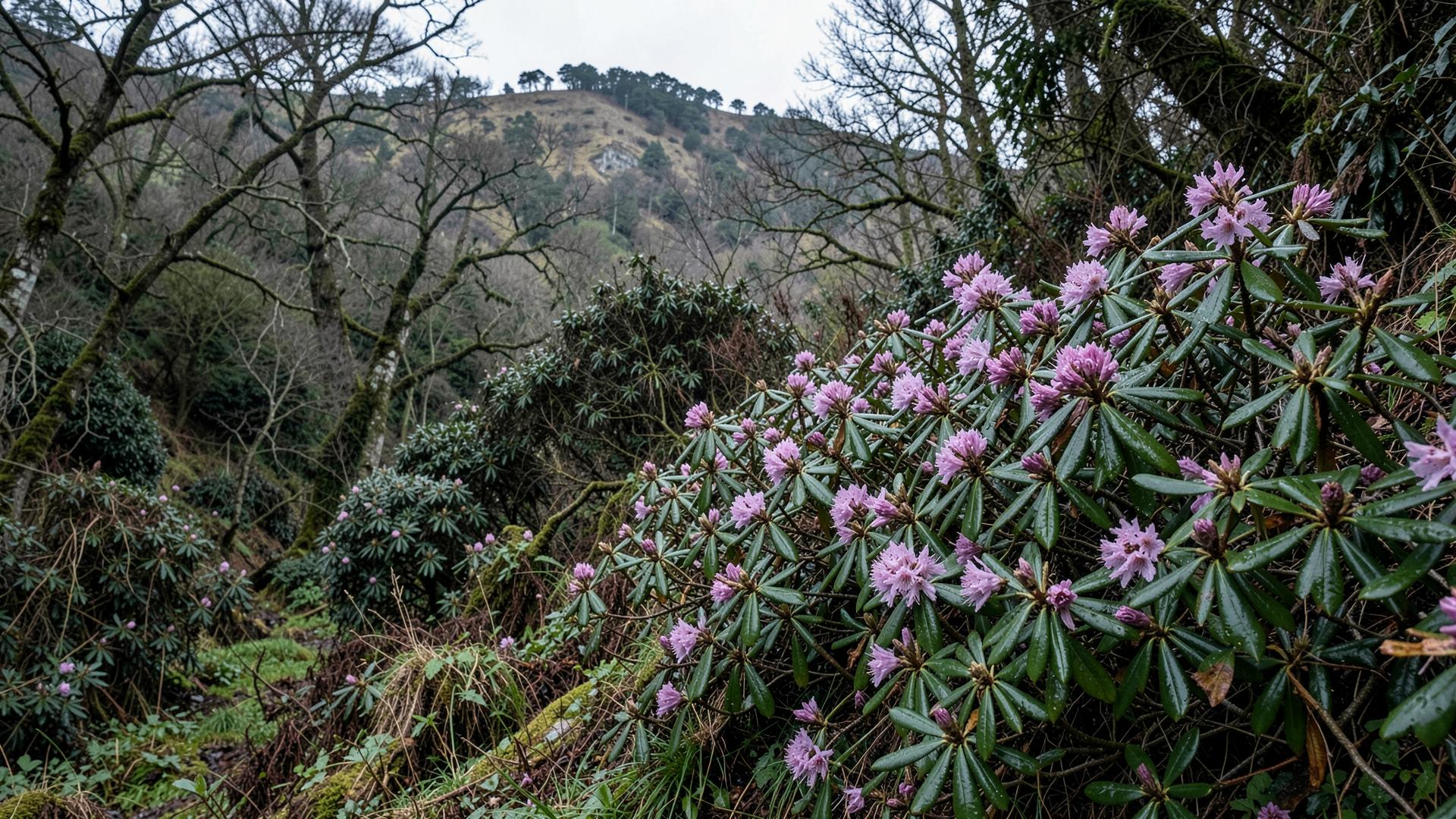
Cut, stump treat and stem injection of shrubs

Best for: Rhododendron, cotoneaster, rugosa rose

Cut low, then treat the cut surface within minutes before it seals. Follow up annually — regrowth and layering stems are the norm for at least five years in Clyne Valley conditions.

Hand-pulling and scything

Best for: Himalayan balsam only

Pull below the lowest node before flowering. Work top of the catchment downwards. Pulled plants can be left to rot on site if no seed has set. This is the one method that suits community volunteer days.

Digging out bulbs and corms

Best for: Three-cornered leek, montbretia

The whole bulb or corm chain has to come out; snapping off leaves does nothing. Bag the spoil — dumped soil is how these two reached most Gower lanes in the first place.

Excavation and licensed disposal

Best for: Development sites and mortgage-critical cases

Dig and cart away, or bury on site under an agreed management plan. Knotweed-contaminated soil is controlled waste and must go to a permitted site. Expect a written, insurance-backed plan — that is what lenders and buyers ask to see.

Swansea treatment calendar

WhenWhat to do
Jan–FebSurvey while dead knotweed canes are obvious. Spray three-cornered leek foliage.
Mar–AprRed knotweed shoots appear. Cut giant hogweed tap roots. Grub out balsam seedlings.
May–JunRhododendron in flower — map it now. First balsam pulls before flowering.
Jul–AugMain balsam-bashing window. Remove hogweed seed heads before they ripen.
Aug–OctBest window for knotweed foliar spraying and stem injection.
Nov–DecCut and treat rhododendron and cotoneaster stumps. Plan next season by catchment.

Choosing a contractor

  • Ask for an insurance-backed guarantee if a sale or mortgage is involved.
  • Ask how many seasons the plan runs and what happens if regrowth appears in year four.
  • Ask whether they will inject or spray, and how they will protect neighbouring gardens.
  • Get the survey drawing and the waste transfer documentation in writing.