← Species guide
Japanese knotweed
Highest riskFallopia japonica
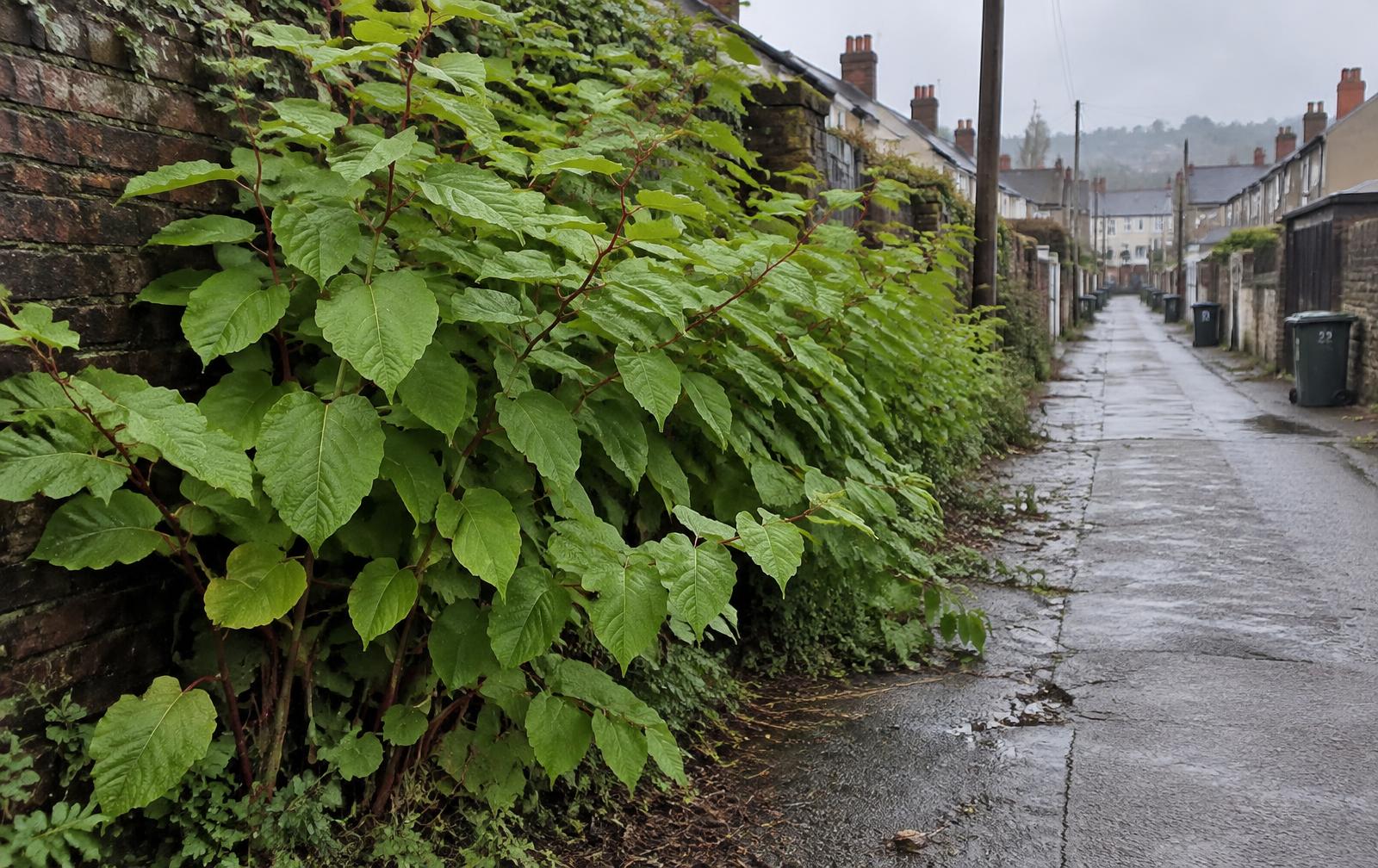
Swansea is one of the worst-affected places in Britain. Knotweed dominates back lanes, railway embankments, riverbanks and derelict plots across the city, and it is the weed most likely to affect a mortgage or a sale.
How to identify it
- Bamboo-like hollow stems, green with purple or red speckles, 2–3m tall by midsummer
- Shield or heart-shaped leaves in a clear zig-zag pattern along the stem
- Creamy-white flower tassels in late summer
- Red asparagus-like shoots pushing through soil, tarmac and cracks in spring
- Dead orange-brown hollow canes standing through winter
Why it matters
- Exploits and widens existing cracks in drains, paths, walls and tarmac
- Can delay or block mortgage lending within 7m of a habitable building
- Shades out native riverbank plants, leaving bare soil that erodes in winter floods
- Costly to remove legally: contaminated soil is controlled waste
How to control it
- Do not cut, strim, dig or fly-tip it — every fragment can start a new stand
- Glyphosate applied to leaves in late summer, before die-back, repeated for 3–5 seasons
- Stem injection near water or in gardens where spray drift matters
- Excavation and licensed off-site disposal, or on-site burial under a management plan, for development sites
- Insurance-backed treatment plans are what lenders normally ask to see