South Gower coast · High pressure
Mumbles, Langland & Caswell
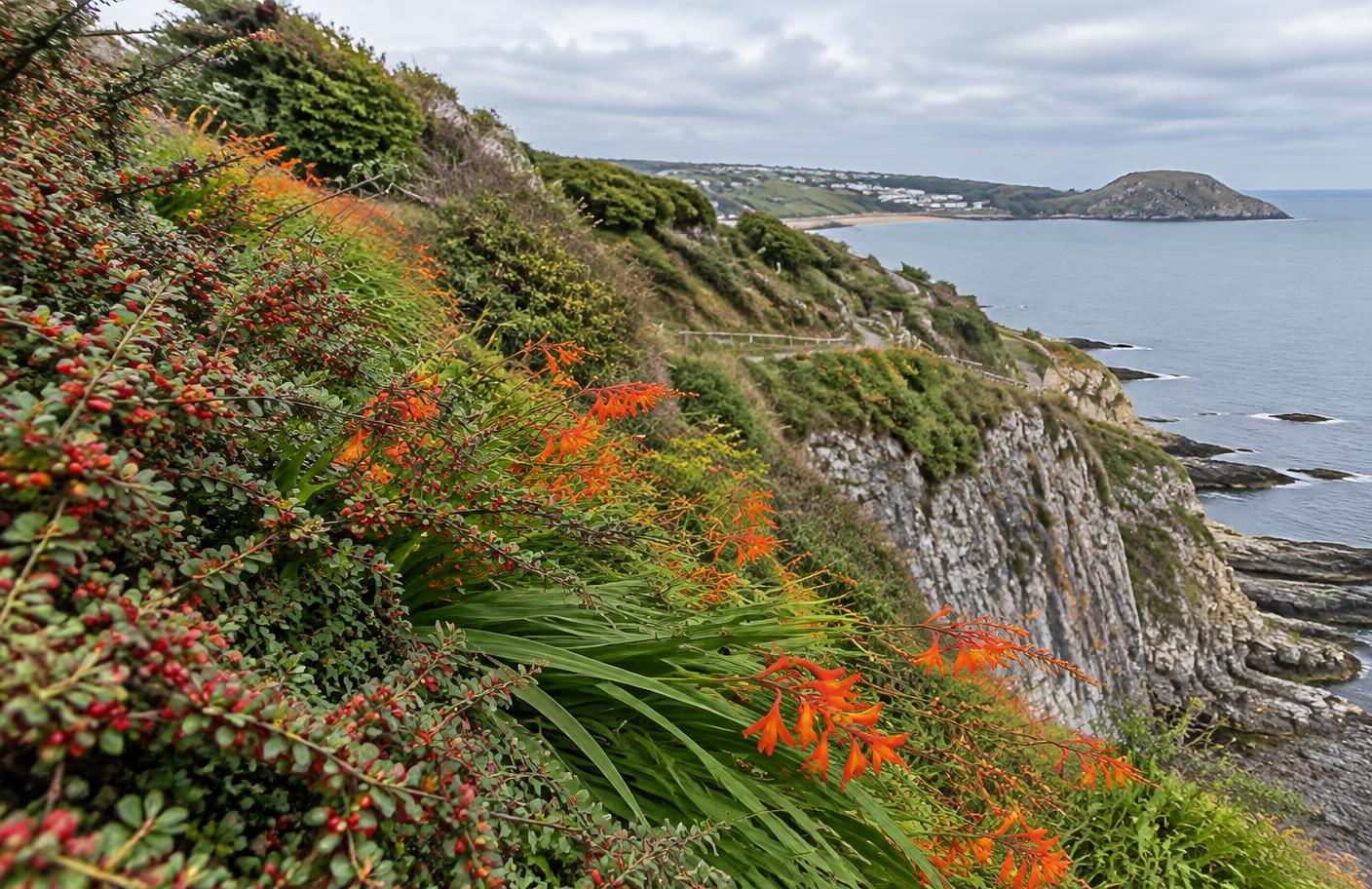
Garden escapes are the issue here rather than knotweed. Cotoneaster and montbretia move from clifftop gardens onto limestone grassland of real conservation value.
Streets and places to watch
- Mumbles Road
- Newton Road
- Langland Road
- Caswell Bay Road
- Higher Lane
These are the corridors where growth is most often recorded — lane walls, verges, brook banks and cleared plots. Individual gardens are not listed.
Towns, villages and places in this area
Each place has its own local guide with a map, area facts and the plants to watch for.
What grows here
Wall cotoneaster
Birds carry the berries from gardens straight onto Gower's limestone cliffs and grasslands, where cotoneaster smothers some of the rarest plant communities in Wales.
Flowers May–June, red berries autumn into winter
Montbretia
The orange garden crocosmia that has escaped into hedge banks and coastal paths all over Gower, forming solid corm mats that nothing else grows through.
Foliage spring, orange flowers July–September
Three-cornered leek
Sometimes picked as wild garlic. It carpets shady verges, churchyards and hedge banks across west Swansea and Gower, replacing native bluebells and celandines.
Leaves from December, flowers March–May, dormant in summer