Lower Swansea Valley · Severe pressure
Landore, Morriston & Plasmarl
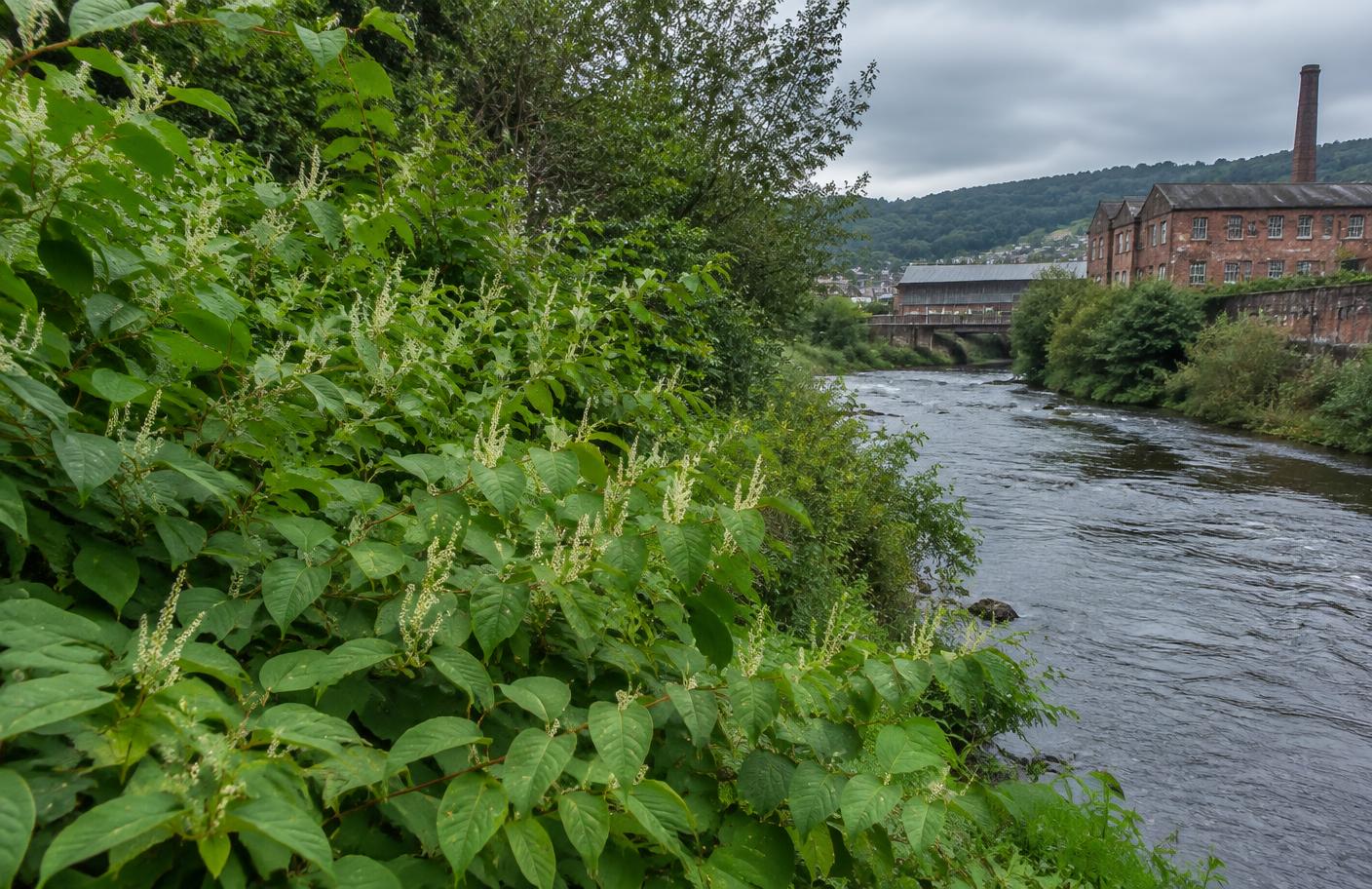
The worst corridor in the city. A century of industrial tipping, then the Lower Swansea Valley clearance, left ideal disturbed ground beside the Tawe. Knotweed runs almost continuously along the river and old rail beds.
Streets and places to watch
- Neath Road
- Cwm Level Road
- Woodfield Street
- Clase
- Ynysforgan
- Beaufort Road
These are the corridors where growth is most often recorded — lane walls, verges, brook banks and cleared plots. Individual gardens are not listed.
Towns, villages and places in this area
Each place has its own local guide with a map, area facts and the plants to watch for.
What grows here
Japanese knotweed
Swansea is one of the worst-affected places in Britain. Knotweed dominates back lanes, railway embankments, riverbanks and derelict plots across the city, and it is the weed most likely to affect a mortgage or a sale.
Shoots March–April, peak growth June–August, canes die back brown in winter
Himalayan balsam
The pink-flowered annual that lines almost every stream in Swansea. One plant throws up to 2,500 seeds and the seed floats, so a single upstream patch reseeds miles of bank.
Germinates March, flowers June–October, dies back with first frost
Giant hogweed
The one that hurts people. Its sap makes skin blister badly in sunlight, and the burns can recur for years. Children are most often affected because the hollow stems look like play material.
Growth from April, flowers June–July, seeds August