Central Swansea · High pressure
City Centre & Castle
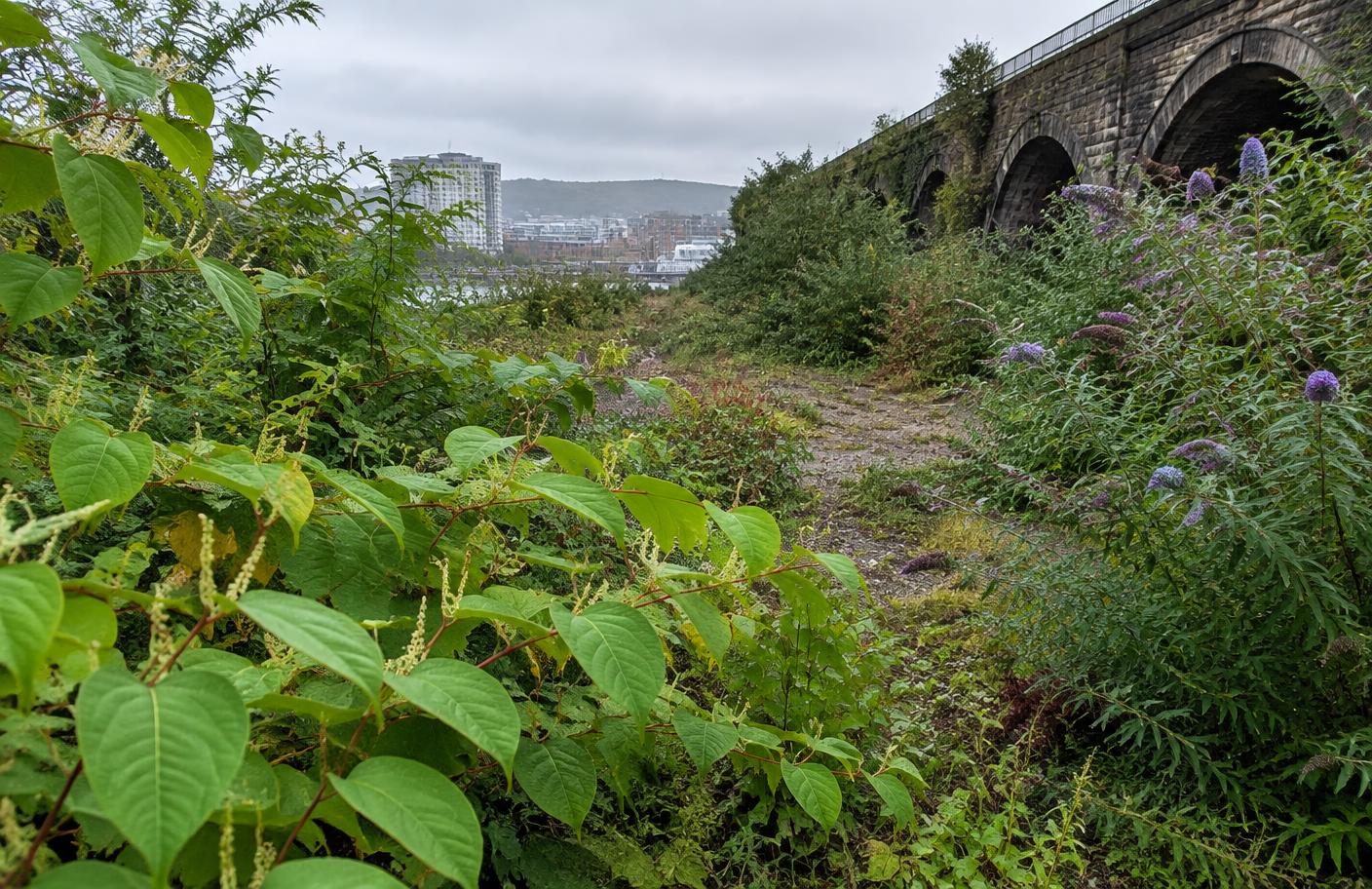
Knotweed and buddleia colonise derelict plots, cleared shop sites and the retaining walls along The Strand. Old railway land behind High Street station is a long-standing source.
Streets and places to watch
- Oystermouth Road
- The Strand
- High Street
- Dyfatty
- Castle Square surrounds
- Kingsway
These are the corridors where growth is most often recorded — lane walls, verges, brook banks and cleared plots. Individual gardens are not listed.
Towns, villages and places in this area
Each place has its own local guide with a map, area facts and the plants to watch for.
What grows here
Japanese knotweed
Swansea is one of the worst-affected places in Britain. Knotweed dominates back lanes, railway embankments, riverbanks and derelict plots across the city, and it is the weed most likely to affect a mortgage or a sale.
Shoots March–April, peak growth June–August, canes die back brown in winter
Three-cornered leek
Sometimes picked as wild garlic. It carpets shady verges, churchyards and hedge banks across west Swansea and Gower, replacing native bluebells and celandines.
Leaves from December, flowers March–May, dormant in summer
Buddleia
Not on Schedule 9, but the most visible plant on city-centre walls, gutters and derelict roofs. It roots in mortar and opens up joints, so it is worth pulling while seedlings are small.